221.2K
Downloads
523
Episodes
Nonprofit News, Tech & Marketing Stories from Whole Whale, a Nationally Recognized Nonprofit Marketing Agency for over a decade. Founded in 2010, Whole Whale is a B-Corp that runs analytics, digital advertising, Google Ad Grants, and SEO for nonprofits.
Episodes
Thursday Jun 09, 2022
Thursday Jun 09, 2022
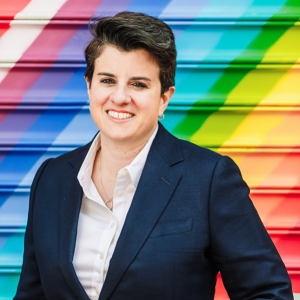
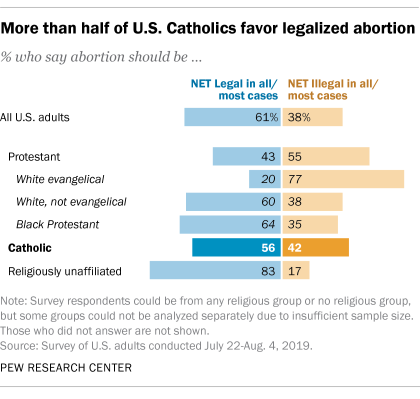
Jamie Manson, President of Catholics for Choice joins host George Weiner for a conversation about what the future of their work looks like in the reality of a post Roe v. Wade world. Jamie shares how rogue bishops in the church are actually speaking in direct contrast to the way a majority of Catholics in America feel about the right to choice according to Pew Research (https://www.pewresearch.org/fact-tank/2020/10/20/8-key-findings-about-catholics-and-abortion/).
Jamie also shares how she is keeping her team motivated and healthy in a once-in-a-generation moment at the organization when the stakes have never been higher.
About Jamie Manson
Jamie Manson is President of Catholics for Choice. For over fifteen years she has been a thought leader and advocate in the field of women’s equality and reproductive rights in the Catholic Church and the public square. For 12 years, she was a columnist at the National Catholic Reporter where she was one of the few openly LGBTQ journalists in the Catholic media in the world. She was an often-solitary voice for reproductive freedom and justice and was one of the first to sound the alarm about the right-wing push for religious freedom.
Jamie’s expertise in Catholicism and sexual ethics was first formed during her studies at Yale with her mentor, Margaret Farley. She edited and wrote the introduction to Changing the Questions: Explorations in Christian Ethics, a collection of writings by Margaret Farley (Orbis Books, 2015). Jamie has published op-eds in the New York Times, NBC Think, Ms. Magazine, and Rewire and has been featured in dozens of media outlets, including NPR, the LA Times, and CNN. She is the recipient of the Sr. Theresa Kane Woman of Vision and Courage Award.
Tuesday Jun 07, 2022
Tuesday Jun 07, 2022
Independent Sector Releases Survey On Nonprofit Trust
Independent Sector has released its third annual survey on trust within the nonprofit and civil society sector. The findings show that nonprofits still benefit from strong public trust (56% of respondents say they trust nonprofits), making NPOs among the few social institutions that the majority of the public trust, along with small businesses and community members. However, the sector saw a statistically significant decrease of 3% in trust compared to 2020. The survey also found that education and financial wellbeing drive nonprofit trust, that purpose-driven integrity is essential, and that Gen Z is increasingly skeptical of the nonprofit sector. The survey fielded answers from 3,015 Americans and had a margin of error of +/- 2%.
Read more ➝
Summary
- 233 mass shootings have happened so far in 2022: nonprofit | The Hill
- Rising gas prices affect delivery operations for nonprofits | KSHB 41 Kansas City News
- Inflation impacts nonprofit’s ability to feed thousands of kids over the summer | CBS 46 News
- Small Nonprofits Shouldn't Be Subjected to the Same Payroll Tax as Amazon and ExxonMobil | The Chronicle of Philanthropy
- Nonprofit helps formerly incarcerated firefighters get jobs | WesternSlopeNow
Rought Transcript
[00:00:00] George: This week on the nonprofit news feed for gosh, June 6th, June 6th, the week of June 6th, we were talking about some of the information coming out of the independent sector on a survey, a non-profit trust, as well as some other headlines related to themes that we've been covering Nick. How's it going?
[00:00:18] Nick: It's gone. Good, George.
[00:00:20] George: Doing all right. Just, I had a wedding last weekend of an in-law's fun. Hadn't been to a wedding for awhile. So good time to celebrate. Hopefully nobody got COVID.
[00:00:31] Nick: That's good. TIS the site TIS the season for weddings.
[00:00:36] George: Yeah. weddings. weddings, and funerals. They go on, no matter what I'll say that.
[00:00:41] Nick: That is true. But bring us back to the nonprofit news. We'll start off with our first story, which comes from independent sector. Independent sector has released its third annual survey on trust within the non-profit and civil society sector. And the findings show that while nonprofits still benefit from strong.
[00:01:02] Trust where 56% of respondents say they still trust non-profits. This is actually a decrease of 3% in overall trust in nonprofits compared to 2020, there are a couple other really interesting findings within the report. One is that nonprofits were the strongest institution when it comes to public trust, beating.
[00:01:27] Legacy institutions like government, the media substantially that being said, there's a couple of interests. Nuances and the data and the survey found that education and financial wellbeing drove non-profit trust. In fact, education level was the prime determinant more than any other demographic determinant of trust in non-profit organizations.
[00:01:53] They also found that gen Z is increasingly skeptical of the nonprofit sector, not having a negative. uh, perspective per se. But not having a positive one either. So the jury is still out on them when it comes to building that trust in non-profits as a social institution. But George, what were your takeaways from these really interesting and important survivors?
[00:02:19] George: yeah, just to start, I always try to find and understand the sample size. In this case, it is a U S general population of 3000 with a margin of error of plus or minus 2%. So any number you hear it's like give or take a couple points. So that's just important to put in mind. I think the differences based on age range, And rising generation being a touch more skeptical is in line, uh, overall positive in terms of this report that I look for is just look, we're talking about people's trust across businesses, government, media, and nonprofits, these four major pillars of information in our society and nonprofits continue to be at the top of it.
[00:03:05] Overall trust erosion, just seemingly undercutting everybody. However, nonprofits just play this incredible role with regard to communicating valuable information at a time of mistrust. And so I, you know, I always like seeing that in terms of nonprofits being up there, but the overall number, I believe slipped 3% for nonprofits, right.
[00:03:28] Nick: It did. Yeah. The overall number. Crease 3%. However, it was still high at 56%. And the only other social institution that was rated that high in the survey were small businesses and just local communities and community of members. So in terms of our social institutions, nonprofits are still the highest, but yes did slip 3%.
[00:03:55] George: I'd say the other piece that I pulled out here is the biggest differentiating demographics. Characteristic is college non-college so more highly educated individuals in this particular survey, uh, were, uh, at a higher likelihood to be trusting the social impact sector, nonprofits and philanthropy.
[00:04:17] Nick: That's an interesting one to me. And I think it goes. I think it's interesting because a lot of nonprofits, particularly those that focus on social welfare, uh, might be helping folks in poverty or who may not have had the ratty opportunity to go to higher education. So maybe an interesting dichotomy between.
[00:04:44] The folks who might be funding contributing, running, and building non-profits versus beneficiaries uh, potential beneficiaries of those services. And of course that's a broad oversimplification, but to me that was, that was somewhat. George, what do you make of gen Z being more skeptical of nonprofits as an institution?
[00:05:07] The, the actual data show that they were more trusting of, uh, crowdfunding, uh, type campaigns and a little bit more enthusiastic about, uh, about donating, for example, to those games.
[00:05:22] George: Part of me is not surprised. Ultimately, rising generations tend to have higher levels of skepticism of institutions that pre-existed, that are run disproportionately sometimes by the other generation. And just, it's like a natural curve of what goes. The rise in, in crowdfunding and crowdfunding philanthropy is it's a personal frustration of mine because I don't believe it is the most intelligent way to distribute funds for a public.
[00:05:49] Good. I think it's the most popular, I think it's the most social, I think it is near term, gratifying, longterm, even potentially destabilize. To say here's how philanthropy should be done. Where as a massive crowd, smarter than an individual who studies a topic, there are times when the crowd is far smarter, but there are other times when, you know, maybe an organization that has got 10 employees doesn't need $45 million in the span of four days.
[00:06:20] Maybe that's a thing that you have to sort of balance. And I think, you know, it's a pendulum, it's a pendulum of a philanthropy that all, uh, Obviously, uh, come and go. And maybe the rising generation pro you know, like coming up, we'll be like, wait a minute. We've seen this show too many times. And the only person who wins in crowdfunding consistently as a crowdfunding platform.
[00:06:41] Okay.
[00:06:42] Nick: That's fair. I guess in turn, gen Z's are, are skeptical. You are, and we are skeptical of gen Z, uh, over simplification again, but.
[00:06:53] George: Yeah, I mean, you also saw this in a macro around crypto, and obviously I've not shied away from being a fan of crypto philanthropy. However, it does also make that crowdfunding a lot easier. I cannot go understated the fact that millions and millions of dollars were sent to the Ukraine without the permission of the guiding powers that be to do so.
[00:07:16] And that's, it feels very gratifying in the most. And you know, who who's to say how, you know, 80 plus million is, is being, being used. And it was something that when you take away the middle people, institutions and controlling bodies in place, like you just get money to where you think it needs to go, and it will have different types of second order effects both positive and negative.
[00:07:46] Nick: Yeah, I think that's, I think that's that's fair. Agree. All right, we'll move on to our next story. And this comes from the hill and is a little bit more sobering. And the hill reports that data from the gun violence archive, which is a nonprofit has supported 233 mass shootings that have taken place so far this year in the United States.
[00:08:11] And this data comes amid the fallout. Several devastating shootings in New York, Texas, Oklahoma. And just with seems like, uh, increasing temperature in the country when it comes to, uh, gun violence. But what struck me about this? Wasn't so much the gun violence as. As terrible as it is not something I'm surprised about sadly, but that the most definitive source on this is actually coming from a nonprofit and the gun violence archive is the go-to source for news organizations and researchers, uh, trying to assess.
[00:08:53] Gun violence and mass shootings in particular in the United States. So really interesting that a nonprofit is stepping up here and filling that void, uh, to provide the public with really vital information that for a long time, The government, for example, was barred from studying you know, government agencies were barred from studying the health effects of gun violence.
[00:09:15] So there was very, oh yeah, this is famously. That rule was lifted only within the past couple of years. But the CDC, I think it's, the CDC wanted to do a research on gun violence and Congress specifically for beta in the allocation of. So there's kind of a dearth of national data on gun violence and mass shootings.
[00:09:43] And the data is all over the place. But it seems that this nonprofit is really kind of DFR Tate of a source of truth on this.
[00:09:51] George: Yeah. I think getting back to definitely check this out. Gun violence, archive.org. I'm embarrassed. I had never seen this nonprofit, but it's a great model for showing how you can use data, information and honesty to hold up the mirror to society and say, this is what the numbers tell us about what's going on.
[00:10:14] This isn't. I mean, as much as you can say, it's like, it's not an agenda here. It's just your, your numbers. You're not doing well by any measure of what's going on here. And the question is, is this, this, you know, what is, what is tolerant? You know, there's twenty twenty one, six hundred and ninety two mass shootings.
[00:10:34] Is that tolerant of a society. I mean, it was tolerant then it was tolerant in 2020 with 610. Mass shootings. It was tolerant by our society in 2019, with 417 mass shootings. At what point, I wonder because the amount of mass shootings per year, it's some sort of threshold. And this organization seems to be asking that direct question by holding the numbers up, uh, as well as other total incidents of guns and other pieces, but the mass shootings.
[00:11:10] Uh, particularly of importance because we made assault rifles legal in this country after having them be illegal throughout the nineties. And we simply let the clock expire on that permission. And now I know they're debating slowly, whether or not that might change, but I think one take a look at gun violence, archive.org, to take a look at how your organization responds to your own cause and your backyard, not just gun violence, but how might data be used in this.
[00:11:37] way?
[00:11:38] To effect change and to hold up that social mirror.
[00:11:41] Nick: Absolutely George, that's a great analysis and I have a little bit more. And formation on the law. I was talking about there's a 19 66, 19 96 rule that passed through Congress, uh, called the Dickey amendment, which barred the CDC and other government research organizations from using funds to quote, to advocate or promote gun control, which was widely seen as essentially prohibiting any study of gun violence.
[00:12:08] Or gun sales, what have you at the federal level, uh, but, uh, here's to have been repealed in 2019. But, uh, the article goes on to quote that there is a decade gap of, uh, data there that needs to be filled in. So like you said, this, this nonprofits doing tremendous, tremendous public service.
[00:12:32] All right, I'll take us into our next story. And this comes from at KSHB 41, Kansas city news, and I'm going to package it with, uh, the next story from CBS 46 news. And these two articles about rising gas prices affecting delivery operations for nonprofits and similarly. Inflation impacting nonprofits ability to feed thousands of kids over the summer.
[00:13:01] So we have two local stories here. One is a nonprofit, uh, you know, the price of gasoline is affecting their ability, uh, to, to move, uh, goods around and their operations. And uh, this other story. Inflation, uh, which we've talked about on this podcast, really impacting food banks and other, uh, services providing nonprofits.
[00:13:23] But, uh, George, do we see this abating anytime soon? Is this going to be a problem for the long-term? Do we think how, how should we think about this kind of a macro economic, or even just a macro level?
[00:13:39] George: So one of the reasons I brought up the articles that I did, I mean, there's so many of these articles about inflation. We talked about it on here, but the shift in the summer is that the school food programs that disproportionately feed a tremendous amount of food, insecure young people in this country through public schools.
[00:13:57] Goes away during the summer. And so there's going to be a different level of food insecurity, hitting families across the country. This summer, while gas continues to rise and food prices continue to clearly hit new inflation highs and the cost of, uh, and the cost of food to feed, uh, is going, you know, that that need, that has to be met and it's disproportionate during the summer.
[00:14:21] So these ones should program. Uh, or something that I was just looking at. And so if your organization is in and around it, I think messaging the urgency associated with a shift that, that could maybe help with fundraising or improving the narrative.
[00:14:36] Nick: Absolutely. I agree. Those programs serve such a vital importance for our school students. And. The summer is hard for a lot of families that don't have not only the those food programs, but even then have to consider things like childcare or paying for camp or whatever it may be. Puts a lot of, a lot of burden on, on folks.
[00:15:00] So that's a great thing to flag. All right, our next article, George, I know this is one, uh, that you're a topic you're passionate about and you're passionate about it because you, in fact wrote this article and the title is small. Non-profits, shouldn't be subjected to the same payroll's hacks as Amazon and Exxon mobile written by you in the Chronicle of philanthropy.
[00:15:26] Do you want to tell us a little bit about what you.
[00:15:30] George: I'm just going to admit, I know this is just shameless. It's shameless for me to bring my own article into our own newsfeed. However, this has been on my mind for probably a couple of years of how effectively the same payroll tax, right? When you pay an employee. That sort of percentage of payroll tax that goes to state and federal, which, you.
[00:15:50] know, 10 to 14% give or take is the same rate that a Facebook exec, sorry, Mehta, exac, or somebody at Exxon or somebody at any other size organization is paying the same percentage rate instead of something like, and maybe you're like, oh, that makes sense.
[00:16:06] It's a flat thing. Except if you look at our income tax, it's a progressive tax. The percent that a billionaire has to pay is more. On paper, at least than somebody making minimum wage yet at the point of sale at the point of the moment where the nonprofit or the fortune 100 company is paying the person, that's the same percentage rate.
[00:16:31] And so I'm suggesting here a policy where in nonprofits that. Our smaller frankly, uh, that are smaller for effectively. I'm calling about a quarter million charities that are operating with less than a hundred employees and less than 5 million in annual revenue. Basically for, you know, a few billion dollars could essentially we could remove the payroll tax.
[00:16:56] They're giving them an extra 10%, uh, operating to either raise wages, to hire people, to serve the communities that they already do. And, and by the way, they are, you know, 5 0 1 C3. So they are doing public good. Uh, and I put the cap on that in terms of the Cypress medical thing is because I don't think a nonprofit with like 10,000 employees is the same.
[00:17:18] Type of situation that a smaller under 100 person nonprofit is. And yeah, it's a, it's a it's part thought experiment, but also part super freaking practical that literally for a cost of 3.7 billion I'd calculated, which could easily be made up with a progressive tax that we're in up a touch more for organizations like Amazon.
[00:17:44] To pay cause they can't get around those taxes the same way they can on income tax on, on their, on their corporate taxes. They can't get away from the fact that they need to pay humans to do work. And that's where a percent is taken out. It'd be pretty easy to move up half a point for organizations that are operating over a billion dollars because they're dodging their freaking taxes.
[00:18:05] Anyway. Anyway, this is a window into how. I get with social impact.
[00:18:12] Nick: We love geekiness onto this podcast. And George I'd hesitate to guess that listeners who've made it this far into the podcast are just as geeky. So I think we are in good company, but I wish I had, I wish I had a room. I
[00:18:27] Uh, we'll look at the data. We'll see many people make it this far. I wish I had a room to, to get you in someone to talk to someone in a suit in a, in a nice office in DC, because I think they need to hear.
[00:18:41] George: Well, I'm not going to give up on this idea. I don't know where to go next. I did get a quote from the independent sector, uh, that, you know, they, they do think it's you know, potentially plausible and they, they said there is, uh, some type of, you know, precedent for this type of tax. But. We'll say, I don't know where to go with it next, but I tend not to let things drop, so I'll keep pushing this.
[00:19:04] And if anybody listening just wants to take this and run with it, please go, go do it. I'll give you the research. Cause I should be doing my real job instead of trying to push something like this,
[00:19:18] Nick: It's for the public. Good. And speaking of public. Good. How about a feel, good story from our favorite.
[00:19:26] George: please.
[00:19:28] Nick: All right. This story comes from a Western slope now.com not entirely sure, but it is about a nonprofit that's helping, helping formerly incarcerated firefighters get jobs. So it's, well-known that, especially out west, including in California, Oregon, and Washington states have relied on incarcerated men and women.
[00:19:52] Wildfires. And that's all, that's a whole other conversation. But they are often trained to perform here at grueling work while earning just a few dollars, sometimes as little as $2 a day. However, there is a nonprofit group with some foundation backing. That's trying to help those firefighters turn their in carceral rated job into a real job.
[00:20:19] Upon, uh, their release. So it's helping folks get the, uh, the certifications they need. Cause they already have the real-world training. I've already been doing it. They basically already are firefighters. But helping incarcerated folks, uh, turn what they learned during, during prison into a career.
[00:20:38] And I think that's really tremendous. It helps, uh, reintegrate firefighters into, or formerly incarcerated folks. Newly firefighters into our communities. It helps them, uh, serve a public good and public benefit. And we interview when the individuals who participated. And he was saying that he felt that he had something to give back to society and was really proud to be able to serve in that capacity.
[00:21:02] So this is a really innovation, innovative program, I think. And I'm for any kind of program that helps formerly incarcerated folks reintegrate into society, uh, because. It reduces recidivism and it has a whole host of other social benefits, but cool to see.
[00:21:20] George: That's a really great quote in here from a a person. Uh, incarcerated and Brandon Smith says when you're incarcerated, you have this stigma of being a public nuisance. Being a firefighter, provided an opportunity for me to give back to community and give myself a sense of pride. It was something I wanted to continue as a way of giving back to the community once I came home.
[00:21:44] But they noted that after his sentence was completed in 2014, it really wasn't clear how to essentially become a firefighter, even though he was. Already trained in that. And so the certificate cations that he received while incarcerated didn't count and he, uh, and he couldn't even apply for some positions do the criminal records.
[00:22:05] So this is a great nonprofit. And by the way, you know, speaking to somebody who's in California, like we need firefighters very, very much so also across the Midwest, because it's going to be a very tough fire season. So hats off to these folks. All right, Nick. Thank you.
[00:22:22] Nick: Thanks, arch.
Tuesday May 31, 2022
Tuesday May 31, 2022
In Wake Of Uvalde School Shooting, Gun Rights Advocacy Groups Fill Void Left By NRA
On May 24 a gunman opened fire at Robb Elementary School in Uvalde, Texas killing 19 students, two teachers, and wounding 17 others. The horrific shooting has rekindled the decades-long debate in the United States between gun control and gun rights advocates. Within economically developed countries, the United States by far outnumbers other countries in terms of both gun ownership and gun deaths per capita. Among gun rights advocacy groups, however, the infighting and reputationally-damaged NRA has provided an opportunity for other organizations (many tax-exempt) to fill the void, according to reporting from The Washington Post. The National Association for Gun Rights, a 501(c)4 group that often criticizes the NRA for being too compromising, saw revenue increase to $15 million, up from $6 million in 2019. Other gun rights groups have seen similar increases in revenue and capacity.
Read more ➝
Summary
- Nonprofit Begins Tracking Anti-Asian Hate Crimes in the Midwest | NBC Chicago
- Nonprofits Fighting Gender Violence Have Struggled Since Losing Buffetts' Funding. They Urgently Need More Support. | The Chronicle of Philanthropy
- Coloradans asked to take water conservation pledge | 9News.com KUSA
- Tax breaks aren’t prime reason for high-net-worth philanthropy, study finds | CNBC
- Nonprofit keeps taps Memorial Day tradition alive | Military | kdhnews.com | The Killeen Daily Herald
Rough Transcript:
[00:00:00] George: This week on the nonprofit news feed we have got in the wake of the Uvalde, the school shooting information about how gun rights advocacy is actually increasing for some nonprofits and a number of other summary articles. Following coming after, uh, this Memorial day weekend, NEC.
[00:00:21] Nick: It's going good, George. We have a lot to cover this week. Of course, the first story we're going to talk about is. Uh, around what happened in your Uvalde and better conversations about gun rights and gun control advocacy groups. So last week on May 24th government opened fire the Robb elementary school in , Texas killing 19 students to teachers.
[00:00:46] And wounding 17 others. And this terrific shooting has rekindled a decades long debate in the United States between gun control and gun rights advocates. Uh, now within economically developed countries, the United States by far outnumbers others in terms of both gun ownership and gun deaths per capita.
[00:01:06] Um, but along the debate about how to solve. You have gun rights, advocacy groups on one side and gun control advocacy groups on the other. Uh, we wanted to highlight an article from the Washington post, which is talking about a little bit of the landscape change on the side of the gun rights advocacy groups.
[00:01:30] We've talked about those on this podcast before how the NRA has suffered from lots of infighting and legal challenges. As a whole has seen its reputation damage quite significantly over the past couple of years. Um, but as the Washington post points out, a lot of other tax exempt organizations now seem to be filling the void, um, and potentially taking the lead on the gun rights.
[00:01:59] Side of the issue here. The national association for gun rights is a 5 0 1 C4 group that often criticizes the NRA for being too compromising saw revenue increase to 15 million up from just 6 million in 2019 on the article sites that lots of other gun rights groups have seen similar increases in revenue and capacity.
[00:02:25] So the takeaway here is that what was. Very consolidated. Uh, landscape in terms of advocacy with one go-to group is now splintering and other groups are taking the place, uh, and serving the role once filled by the NRA. But George, this comes as the NRA held its annual conference in Texas, just three days after the shooting.
[00:02:51] Um, this conference was on last Friday and it's a fraught moment in the United States. And, um, You know, personally, I think that that gun control and gun safety needs to be acted upon and legislative upon. And unfortunately that were happened, but interesting, nonetheless, to see the landscape on the gun rights side, change in pretty significant.
[00:03:12] George: Yeah, it's sort of inevitable the thought that tamping down the NRAS ability to sort of fundraise and operate effectively to assume that that would stop. The progress of guns in this country. And it's unbelievable power in terms of putting money into politics is, is errand, right? It is. It's sort of targeting your energy at the, the wrong enemy because like a hydro, when you cut off its head to more show up in its place, inevitably the source of the money is not going away.
[00:03:51] The amount of guns purchased after an event like this inevitably increases, and that simply puts more money in the hands of manufacturers, which then finds its way inevitably into any functioning non-profit willing to carry the flag of, of gun rights over human. And so, you know, in a moment like this, there's a, you know, a rare opportunity to get the country's attention and to focus on something.
[00:04:18] I am having a hard time finding faith in Congress that immediately chose the bold action of going on vacation and leadership that has just polar polar views. Interesting narratives that I've seen coming out here are, is around the fact that we actually had a ban on assault. Right. Had a band. And if you look at the number of mass shootings prior to 2004, when it went out of the fact where he was put into place in 1994, by president than bill Clinton, the number of mass shootings go up.
[00:04:52] The question that is just hard to reconcile is why, you know, 18 year olds or frankly anyone needs access to high capacity, uh, firearms, if not to kill it. It makes zero sense other than to line the pockets of
[00:05:08] these manufacturers under this like misconceived notion of the right to bear arms and it's absurd extent, you know, why, why draw the line of dissolves? Shouldn't we all have, uh, you know, explosives, why am I put on Dara's watchlist? If I buy a extreme amounts of. It's because you have intent to do harm to large amounts of people.
[00:05:32] There are potential solutions being talked about that that could work. And you mentioned the sort of larger fact of how America has more guns than other countries. You said, uh, a lot more though, you know, and I think it's important to note that our, our guns, our guns per a hundred people are 120 guns per people.
[00:05:52] The next closest is Candace at 34 guns for people. You know that there are more guns than there are people here. Um, and somehow we continue to purchase more. And then that inevitably leads to gun murders per a hundred thousand, which is 30 times worse than Australia's. And a number of times worse than Canada's we're at 3.4 deaths per and Canada is at 0.6.
[00:06:14] So, you know, I think what needs to happen differently this time than the last time we had a tragedy. This magnitude, which was Sally and, you know, Sandy hook, December of 2012 is a reasonable step forward. It's easy to respond extreme to extreme, but I think you, what I'm saying, you, I think. Progressive legislators advocates.
[00:06:43] Non-profits people speaking to this need to couch, the anger and rage and focus on small wins, which feels just painful to say, but small wins and steps toward reasonable controls on. Anywhere that you can gain this, and I'm not going to list the number of policies out there, but there are areas where Americans all can agree and should agree.
[00:07:08] So I think I'm, I'm being a sort of moderate in my expectation, uh, and also analyzing some Google trends and seeing. That so far, we actually haven't hit the overall searches search volume that we saw about a decade ago. Um, in 2013, far from it, in terms of Google trends, searches for gun control as a topic.
[00:07:30] So I haven't seen it take off as high as it probably needs to, to actually move the needle. And again, Congress going on a brave vacation. During this time, uh, is going to slow any potential policy. So the question is for, for how long can the state in the media narrative and hopefully not get taken over also by a counter narrative, which is going to be incredibly attractive to take, which is why the sheriff overseeing this, uh, this, this tragedy chose to wait for.
[00:08:06] Over 15 minutes to take action. And that's, that's not the point. The point is there's an 18 year old who needed medical help and instead he got help from a local gun store.
[00:08:17] Nick: I definitely agree with you. I think to your point for too long folks on the side of the policy debate about wanting stricter gun control have propped up the NRA as this kind of buggy man. But the truth of the matter is. Is ideological divide in this country. And there are a lot of people who repeatedly vote in candidates who are.
[00:08:45] Pro gun. And that, that ideological messaging on the right is, is extreme. And I think it's beyond just money and lobbyist. It's a genuine ideological, perhaps demagogues, but it's an ideological difference. And I think that for folks who are looking for solutions need to understand that it's not just countering dark money and politics, it's actually.
[00:09:09] Changing minds and having those debates and meeting people where they're at to your point about small wins. Um, but something, something we'll continue to watch. And unfortunately I'm not super hopeful as well, but that being said, um, you have to try and, and we'll keep trying. And this year we have a chance to try again.
[00:09:33] So, uh, something, a story and a narrative will continue to be.
[00:09:37] All right, shifting gears a little bit. I can take us into the summary. This one comes from NBC in Chicago, and it's about a nonprofit beginning to track anti Asian hate crimes in the Midwest. So over the course of the pandemic, uh, organizations that track statistics of, um, Uh, hate crimes against Asian Americans have seen in over 300% increase.
[00:10:03] And this particular organization that Asian American foundation is setting up a program to track hate crimes and AAPI violence while providing legal and other support to victims. Um, To build trust, um, and break down barriers with communities, particularly immigrant communities or non native English speaking communities, um, to, to help these folks feel supported in a time where unfortunately, they're seeing a surge in violence against them.
[00:10:33] And I live in New York and there's been really tragically high profile, um, hate crimes against. Asian folks in the New York city area. So there's just something that's, that's very close to us. And I know a lot of here, all of us here at Holwell. So, um, just awesome. Worked from a nonprofit, stepping up to fill that dough, that void when it comes to data and reporting, and that is hugely important when it comes to creating policy decisions and other sorts of interventions to address such violence.
[00:11:05] George: Yeah, I think it's important that. Sir, not the qualitative, but the quantitative on this one, trying to document and get the data of what's going on. So you can really understand the scope of the problem. There's one thing to say, one-off events and like it's easy then for the public to say, oh yeah, but that's just like one lone actor as opposed to the larger incidents going up.
[00:11:28] So yeah, I like this.
[00:11:30] Nick: Okay. All right. Our next story is interesting one, and this comes from the Chronicle of falling anthropy and it talks about how the buffets, um, have stopped funding programs that support women and girls, particularly in the United States. So this article talks about, um, the foundation, um, the, the Novo foundation.
[00:11:55] Uh, quote unquote stunned the nonprofit world by announced thing at the height of the pandemic, that it was halting funding for critical programs, focused on women and girls. And the article goes on to talk with some of the, uh, uh, grant recipient organizations that have been on the receipt had been on the receiving end of such funding, seeing it suddenly dry off.
[00:12:17] And, uh, the, the, the TLDR of this article is. When it comes to corporate philanthropy, single similarly split second decisions can have really lasting and unfortunate ramifications. And, uh, the article kind of goes on to talk about the need for organizations to diversify funding, which is of course easier said than done.
[00:12:40] Um, but George, what's your take on this?
[00:12:42] George: No, we covered the Nova foundation out and shift, and this is just the second order or logical next order effect of that, where, you know, the Nova foundation accounted for or reported 96% of funding for that type of work. And it's. It's it's unfortunate because it does then a cliff and raises questions about, you know, was this?
[00:13:04] you know, especially if they're trying to turn long-term impact, it's hard to do when your funding can drive overnight.
[00:13:09] So, you know, we'll call for much more responsible philanthropy and just, just a warning for anyone who's funding relies heavily 70%, 50% more on one story.
[00:13:19] Nick: All right. Our next story comes from nine news.com K USA. And it's about Coloradans being asked to take a water conservation pledge. This is kind of a cool one. It's called the water 22 pledge, and it includes 22 ways for every Coloradan to save 22 gallons of water every day. And according to this nifty infographic, um, Each Colorado and saves 22 gallons per day.
[00:13:49] That's 8,000 gallons per year, or approximately 48 billion gallons per year for the statewide. So, uh, this of course addressing the, some, uh, climate concerns around, uh, drought and lack of, uh, clean water, um, and, and really, really dangerously low water levels out there. Um, so, uh, I love it. I love this, this kind of educational approach to addressing environmental impacts.
[00:14:19] And of course it takes much more than that, but the fact that this is just one kind of component of that I think is really cool and something we're going to need a hell of a lot more of as we start and continue to tackle the climate crisis.
[00:14:33] George: Yeah. I like stories like these sort of, non-profits stepping up for water crises, which are absolutely going to happen across the west Midwest. This. Based on what they're reporting. I think those, those points are incredibly important, but the practical environmental scientist. That I once potentially wanted to be in, in college, uh, has to also point to the fact that in terms of water consumption, agricultural water use is 89% of Colorado state wide usage.
[00:15:07] So, you know, the, the individuals, you know, cutting back certainly helps, but I think there's also a lot of room for improved farming practices and, uh, smart irrigation systems that can save quite a bit more if we're just being. Logical about it. So, you know, I, I see stories like this. I'm excited about citizens getting in there, but I hope it doesn't stop there.
[00:15:28] And also, you know, allocates for more intelligent, more intelligent ways to save.
[00:15:33] Nick: Absolutely. Our next story is from CNBC and it says the tax breaks. Aren't the prime reason for high net worth philanthropy or. So the study conducted by BNI, BNY Mellon wealth management asserts that in fact, tax benefits are not the primary reason that people donate to charity, um, including, um, hyper wealthy people.
[00:16:03] Um, and the top reasons for charitable giving include they're donated to a special cause they wanted to see impact they, or they want to give back or increase their legacy. Um, so. Maybe the folks who are a little bit too cynical about, uh, charitable giving. So take a look at this and, and of course, you know, there's exceptions well, um, but it restores your faith a little bit, and it talks about interestingly and perhaps more importantly trends amongst younger people, millennials and gen Z while still building up.
[00:16:37] For, as you talk a lot about the greatest wealth transfer in history is about to come our way, um, increasing trends in terms of young people, uh, donating and caring about, uh, social.
[00:16:49] George: Yeah, quoting here. The younger generations are more charitably inclined and they care more about impact and nearly three quarters of high net worth millennials and eight and 10. Gen X-ers investors have a charitable giving strategy according to this report. And I think it's important to note that the, the rising generation and the rising generation of frankly, a million multi-millionaires seem to have that type of lens and probably parked under the effective philanthropy, uh, effective philanthropy, effective altruist type of mantra, where they, you know, the care of where the dollars go in terms of trackable impact into causes and issues that serve a greater.
[00:17:28] Systemic solution. I would say, uh, also, you know, notably people like, um, one of the youngest, uh, new billionaires out there in crypto sandbank, then freed is also said to be making money so that he can spend money aggressively, uh, in, um, in his work. And it's a good trend to be aware of as some, you know, one large donor can, can make a, quite, quite a difference, especially as how.
[00:17:57] Craft your, your narratives and communications to your general audience, because inevitably there are probably a power law dynamic of 1% of that audience has 99% of the wealth.
[00:18:08] Nick: Definitely that's a great analysis and something, I guess we'll see, play out over time, but toward time out, I feel good story to finish.
[00:18:18] George: Um,
[00:18:19] Nick: All right. This comes from KTH news.com, Kilian daily Herald, and it's about a nonprofit keeping them Memorial day, traditional Latifah playing taps. The Mecca Ts multi educational cross-cultural arts of central Texas is a nonprofit organization dedicated to educating and spreading the awareness of cultural music and dance gathered to play taps.
[00:18:46] Veterans grades and honor of their service and sacrifice this Memorial day. And it talks about Mecca Tech's leader and retired us army criminal, Daniel , who was 90, who began this year's remembrance at the grave of his friend. Um, another former board member of this nonprofit retired Sergeant first class Jose land does.
[00:19:07] So, uh, music can be an important and valuable way to serve. That part of our life journey and, uh, recognizing, um, friends fallen and war celebrating life morning life and just overall expression. Um, he's like, it's really important to me and I know to a lot of other people, and this is great to see a nonprofit, uh, using it to pay their respects this Memorial day.
[00:19:38] George: Beautiful way to remember people that have given the ultimate sacrifice for the freedoms that we enjoy. And so yes, to, to the veterans and to the people that are remembering Memorial day, uh, it's much appreciated and like to see non-profits involved in, in keeping these types of traditions alive. Thanks, Nick.
[00:19:59] Nick: Thanks, George.
Thursday May 26, 2022
Thursday May 26, 2022
Interview with Heather Yandow, the founder of Nonprofit.ist, an online resource that helps pair nonprofits with the right consultants; a co-founder of Beehive Collective, a Raleigh-based giving circle; and the creator of Third Space Studio’s Individual Fundraising Benchmark Report.
Host, George Weiner discusses how nonprofits should approach RFPs and finding the right contractor or agency for the type of project they need.
Nonprofit.ist Resources
https://www.nonprofit.ist/home
Heather Yandow is a collaborative co-conspirator and creative thinker with over 20 years of experience in the nonprofit world.
Inspired by issues that touch her heart and organizations invested in relationships, Heather gets joy out of helping groups move forward from chaos to clarity. Phrases like “adaptive leadership” and “change management” are sure to get her mind churning.
Before Heather joined Third Space in 2010, she was the Director of Development and Communications with the NC Conservation Network, a statewide network of over 100 organizations focused on protecting North Carolina's environment and public health.
With a personal motto of “just do it,” Heather identifies problems and dreams up actionable solutions. This talent has led to many projects: Heather is the founder of Nonprofit.ist, an online resource that helps pair nonprofits with the right consultants; a co-founder of Beehive Collective, a Raleigh-based giving circle; and the creator of Third Space Studio’s Individual Fundraising Benchmark Report.
[00:00:00] George: We have got a very fun guest. Heather . Heather is the founder of nonprofit IST that's nonprofit.ist to be clear. And Heather is also a consultant at third space studio. Heather, thanks for joining us. How is.
[00:00:18] Heather: Great. I'm glad to be joining you today.
[00:00:21] George: Well, you know, I came across non-profits, but I've also been watching your work for a while and I laughed because it was similar to a tool that Holwell has tried to build and kind of does on the side. But maybe we can just start with what is a nonprofit just.
[00:00:39] Heather: Good question. So I think of a non-profit is like a florist or a dentist. So a nonprofit is, does a person who has experience with nonprofits. So nonprofit is, is also a website, a directory of nonprofit experts. So coaches, consultants, lawyers, accountants, anybody who can help nonprofits with the challenges they're, they're dealing with.
[00:01:04] So we've got almost 300 folks from across the country as part of our directory and leaders, nonprofit leaders from all over the country can come and find the help that they need there.
[00:01:15] George: And how is a non-profit is just uniquely different than somebody who is working for a for-profit industry. Like, you know, I work on email. Why is the nonprofit is just so important in this equation?
[00:01:32] Heather: I think it's really important because nonprofits have. To some degree, unique set of challenges. We're often resource constrained. We're dealing with different kinds of social issues or behavior change or advocacy that maybe those in the business world might not be. And the nonprofit leadership structure often is really different than what you might have in a for-profit.
[00:01:56] So, if you're working in a nonprofit, you might have to be dealing with a board of directors, but it has a whole lot of influence and power over the decisions that are being made potentially. And that often doesn't exist in the same way in the for-profit world.
[00:02:11] George: And so this site, nonprofit that IST helps people find these professionals, like, how is it, Matt? It sounds like a marketplace.
[00:02:23] Heather: It is a marketplace.
[00:02:24] I, I designed it to be somewhat the Angie's list of nonprofit consultants. We do not have all of the features and Angie's list yet, but it is a place where you can come and. Sorta people you can search by any particular category. You can search by geography. You can look for keywords.
[00:02:45] So if you're looking for a strategic planning consultant in Florida who has experienced with. You can put all of that in there and the system will spit out. Here's a few folks who might fit the less specific you are, the more people you'll get. But we have, I think, a dozen different specialties now.
[00:03:03] And about 40 states, we've got represented.
[00:03:06] George: Interesting. What's the most popular fist somebody is looking for.
[00:03:11] Heather: The most popular is that people are looking for, tends to be fundraising. Unsurprisingly fundraising continues to be the thing that people really need help with and not whether it's figuring out how to ask major donors for.
[00:03:27] funding, setting up bequests, thinking about grant writing, all of those specialties.
[00:03:33] We see a lot of interest in.
[00:03:34] George: So tools, sites marketplaces, like Fiverr have existed for quite some time or Upwork or, you know, fill in the.
[00:03:43] Heather: Yeah.
[00:03:44] George: Why did you decide to create one focused on non-profits?
[00:03:49] Heather: I think what we saw in the, in the world in the marketplace was that there wasn't kind of trusted. just for people who have experience with non-profits. So certainly you could go on Fiverr, you go on Craigslist and find yourself a graphic designer. But if you need someone who really understands strategic planning, or if you want a lawyer who can help with incorporation, Those folks are a little bit harder to find.
[00:04:17] And there was a very fragmented landscape of these directories. So some state nonprofit associations have kind of business directories, some very specific kind of specialties have their own directories, but there was nothing that was really national and that included all of the different kinds of help that non-profits?
[00:04:39] really.
[00:04:39] George: It sounds like a daunting task to try to corral so many independent contractors or small companies. How long have you been building this? How have you been going about adding to the database?
[00:04:53] Heather: So I think it was more daunting than I envisioned. If I had known at the start, how daunting it was, I might not have started. But I began in January of 2019. We got our first expert to be part of the directory. We had a hundred folks by may of that year and opened up to the public. So it's really started getting nonprofit leaders to come and take a look.
[00:05:16] And we've been growing really by word of mouth. So there was a big question when we started, how are we going to credential the people in the directory? How are you going to know that you're getting somebody good? And that for nonprofit consultants is actually a really hard question. There is no one a certificate that we can get.
[00:05:38] There's no, no particular degree. If you're great in one specific area like fundraising, you might have a certification or coaching. But we went round and round about how we were going to credential people and eventually decided that trust is transitive. And so if I trust you as a consultant that you're going to do good work and you trust somebody else who I don't know, then that trust is transitive.
[00:06:05] So I am going to trust that they are also a good consultant. So we have grown by invitation only. So our members can invite. Their colleagues to become part of the network.
[00:06:18] George: Interesting. So it's, if a goes B and B equals C. And see, you could get a drink sometime and hopefully be able to speak the same language. So how does, you know you know, we have a wide audience listening. How would a consultant saying, oh, I want to be on this list. How, how would they go about that then?
[00:06:39] Heather: Good question. So we do Have folks who are not directly connected. There's a way to apply on the website and you just have to answer a couple of questions. One of the other things that I know about consulting is that. One consultant. Isn't great for everybody. So we're not looking to say here's a set of absolutely perfect.
[00:07:01] A plus consultants who are going to work for every person. We're looking to say, here's a set of folks who have some good experience with non-profits who have some trust with their colleagues. And if you're going to hire them, we want you to be a good consumer. We want you to think about how you're actually doing.
[00:07:20] Choose who to work with and make sure that the right fit for you.
[00:07:23] George: Have you ever had to boot somebody for, for, misbehaving?
[00:07:27] Heather: We haven't ever really had to beat anybody for misbehaving?
[00:07:30] I'll tell you that story later.
[00:07:32] George: I love, I love the postscript on that and you know, it's, it's a. It's an important note though, you know, you, you mentioned sort of Angie's list and a part of that is ratings and trust, but at the, at the heart of it, you know, every organization can't be great at doing all of the things. And some percentage of projects just don't go as planned because that's the nature of consulting.
[00:07:56] They have been hired to solve a hard problem, and sometimes it doesn't get solved in the way that everyone hoped. So how do you go about that? I guess as a promise to nonprofits, I assume nonprofits can come on there and post what they need, or look for a professional. Like, what is that type of vetting promise look like.
[00:08:18] Heather: So. Promise that this is a trusted network. We allow people to, for nonprofit consultants, they can post their LinkedIn profile. They can post their email, they can put up testimonials about how great they are. And when nonprofit leaders, when a board member executive director development director comes to look, we really encourage them to think about how they're going to hire well.
[00:08:45] But nonprofits as a website, doesn't get involved in that transaction. We really wanted to make it as frictionless as possible and also free. So for all of our nonprofit leaders who are coming to the site, it's totally free to get in And get access to all of these consultants.
[00:09:02] George: And here's a tough one for you. What about ratings? I immediately think of, as you've mentioned, Angie's list or like a Yelp, I'm saying like, how many stars can I leave people potentially.
[00:09:15] Heather: I've been really hesitant to get into the ratings game. And that is. In part, because I'm not sure in this case they'd be super helpful. I suspect that we would be getting a lot of five-star reviews. And that just in this context, I think people are too nice. I'm not sure that we would actually get the kind of constructive feedback that would be helpful.
[00:09:39] And maybe that's just what I'm telling myself, because I have heartburn about putting that up and having to deal with consultants who might want to take down negative reviews or kind of mediate any of those. Because certainly there are times when I've been a consultant for 12 years. There are times when the work hasn't gone as expected, and it's my fault.
[00:09:59] There are other times when the work hasn't gone as expected and it's actually the client's fault. And so. There's this a lot of a gray area there that I'm hesitant to get into, but is, is definitely on our radar.
[00:10:13] George: I don't know the right answer. I have been in the same game for over a decade, and I'm aware that what happens on Yelp ultimately is the, the polars, right? You end up with extremely happy or extremely frustrated, and that can paint a weird picture and then put no marketplace owner in a weird place. But clearly from a nonprofit perspective, you'd be curious as to sort of number served or something there.
[00:10:42] It's it's hard though. I started this conversation mentioning whole Wales got a similar product, which a, with a much, much, much smaller band. We only look at sort of digital. RFPs website builds for, you know, we originally did this because we don't build websites at whole whale. And there's a lot of things we don't do that whole well, where we want a need, a trusted network.
[00:11:08] You mentioned that sort of transitive property of trust. And so it's like a handful we have less than 20 companies that serve a range of budgets for these types of technical projects and includes like ad-words management. And website dev the problem was, you know, the well, many fold, but just sort of scaling beyond that trust.
[00:11:32] And like, we just, I didn't have the guts to just open up the door wider, but also we didn't have enough projects I'd say to come in. So the two-sided marketplace is super hard. We have. A handful of these RFPs coming in. I'm curious on your side, what does that nonprofit flow look like? What does the, you know, average size you mentioned it's a fundraising fundraising, unsurprised type of consulting people are looking for, but maybe you can paint what that looks like.
[00:12:03] Heather: So we have been actively reaching out about the directory, marketing, the directory, really putting a lot of our budget behind recruiting. Nonprofit leaders to come to the directory. As I said, it's free to join and you've got to join if you really want to dig into somebody's profile. And we've got just over 3000 members now over the past three years.
[00:12:29] So we're doing we're finding that a lot of people are interested in this. The two big ways that folks are finding us one is we invest a lot in Google ads. We have found that that has been a really good way for us to find new. And then also word of mouth. So every time somebody asks me or asks any of the consultants in our directory, do you know somebody who, which we get those questions a lot?
[00:12:56] Our answer is non-profits. So that kind of constant referring back has been really helpful. Because we are not always in the middle of the RFPs the best data that we have about what folks are looking for and what they're getting is from doing some surveys every year. And so we know that folks are finding good people through nonprofits.
[00:13:19] They're getting their projects done. They're recommending it to their friends. They have a pretty high level of satisfaction.
[00:13:25] George: And for our tool, we jokingly called it snorkel. Our front door is an RFP generator. Like we don't let you come into the party unless you have an RFP. Now those three letters, the request for proposals. I know, spark a bit of ire in the consulting space. Maybe you can map out your approach and experience with the RFP.
[00:13:51] Do they don't they dilemma?
[00:13:52] Heather: Yes. So I am anti RFP just to stake my claim. I think that's Absolutely organizations need to get clear about what they're looking for before they approach a consultant, but that is different than having an RFP. An RFP can help you get clarity on some of the questions. How much money do you think.
[00:14:17] When do you want this to be done? What are the big questions are looking to answer? I, have also seen RFPs that are 12 pages long and answer none of that. Right? So they are not necessarily the same thing. I actually asked some consultants on LinkedIn. I put out a post about RFP. And got a lot of great feedback.
[00:14:39] Most folks in a similar situation to me that RFPs are just not what works. And I think they don't work for a couple of reasons. One is often they're really prescriptive and that prescription is either solving the wrong problem or. Putting together a scope of work that just really isn't going to address the need.
[00:15:02] And part of the reason why you want to work with a consultant often is to help diagnose the challenge, help plan out the solution. So if you're already doing that in your RFP, if you've already seen. We're going to have one, two hour board training and one, one hour work session with the executive committee and that's it.
[00:15:21] That's the solution to our problem. Then you're really not using consulting to its full capacity. You're not really using us in a way that's going to be helpful. They also often require a lot of free work. So I am half of a two person consulting firm. We use our time to do the work. And so if you are asking us to put together of five page RFP or five page proposal with lots of responses, we may not ever apply for.
[00:15:53] And that's certainly going to be true for other folks who are not part of larger organizations. So you're kind of skewing your RFPs towards people who have the capacity to sit down and write lots of proposals. And finally they're really impersonal, I think when the best fits come, when you actually have that.
[00:16:15] That personality, when you're able to talk to somebody and you clicked and you both understand the problem, you understand how you're going to work together. Those work styles really mesh and the RFP proposal process really doesn't do that. Well. I just had the best experience and I didn't even get the work, but it was still the best experience I had somebody send me a request for conversations. It was a two page document that included lots of the pieces of an RFP. And at the bottom, it says, if this seems like something you're interested in click here to schedule a 25 minute phone conversation. So I did my partner and I got on the phone. We talked for 25 minutes, fantastic conversation. And at the end of it, he said, okay I'm going to be talking to our executive director.
[00:17:03] And if you move on the next step is a conversation with the two. So that was 25 minutes of our time. 25 minutes of his time. It wasn't the right fit for whatever reason, but that was fine. I would do those calls all day long, rather than write out those large proposals.
[00:17:19] George: I, I wish I could say that. Like that's not perfect because the request for conversation, we see, we get those, like a request for information is also kind of goes by, and it's just so much more efficient. And I will say like, you know, we, we live in an RFP world for project sizes and pieces that. I just have to be part of the DNA of the process.
[00:17:43] You know, one of our approaches is putting out a template that hopefully elicits something usable and it kind of brings somebody through that process, but we don't respond to cold RFPs where we don't get a conversation first. And I think that's an important note. The other piece I'll say about the RFP is it does help focus.
[00:18:03] Sometimes I'd find the project as opposed to. You know, here's a problem. We have no clue what we need. And that's the difference of going to a dentist versus a general practitioner? Do you dentist here, like, let's be clear what the problem is. And so in, in that type of focus, we sort of, we default to the unfortunate RFP.
[00:18:27] But I want to pull back to the size of organization that you somehow end up with. As soon as you kind of like pull together the RFP, you have to assume the type of machinery that can respond to RFP put together those pages. Right? We have a win rate of about anywhere hovering from like 46 to 52%, which means half of our work goes into yield dumpster of, of our.
[00:18:53] How do you think about the budget expectations when it comes to these conversations?
[00:19:01] Heather: The budget expectations from in response to what the non-profit is looking.
[00:19:07] George: Yeah. That awkward conversation about how much does it cost? Well, how much do you have.
[00:19:13] Heather: Yes. So I take my cues from say yes to the dress. And so have you ever seen this though? It is a. is a I don't know what channel is a TLC probably, but it's about women shopping for wedding dresses. And so they walk into a store and there's wedding dresses from, you know, a thousand dollars to a hundred thousand dollars.
[00:19:33] And the bridal consultants, not sales women consultants say. Is there a price point we should pay attention to? This is our price point. We need to respect is there, is there a budget here? And so I lean on that kind of language. So is there a budget I need to keep in mind? Is there a budget you have set aside for this?
[00:19:53] I won't really respond to an RFP. I won't respond to an RFP if it doesn't have a budget in it. Particularly for the kind of work I do. If someone wants a strategic planning process, it really depends on what kind of investment they're looking to make as to what the scope of our work can be. And so oftentimes I will kind of walk folks through that.
[00:20:18] So here's a few different pieces of work we could do if we do all of them. It's a $40,000 project. If we just did this one little piece, it's a $10,000 project, but I need to understand where you are. And so certainly there's budget implications for that. The thing I think we don't often think enough about, especially in the kinds of organizational development projects is what's the bandwidth that the board and the staff have for this.
[00:20:47] So if you're doing a strategic plan or board development, or even in depth fundraising, What else does, does the staff and board have on their mind this year? Are you also going through a diversity equity inclusion project? Are you also celebrating your 40th anniversary? Are you also launching a capital campaign?
[00:21:06] Do you actually have.
[00:21:07] the bandwidth to do this project this year? Or does that help to determine the size of the project as well?
[00:21:15] George: So it's a monetary and a time type of budget.
[00:21:20] Heather: Yes. It's. What resources do you have available for this in the coming year or two years?
[00:21:26] George: It's super important in tough too, because you know, we've seen a lot of folks. Well, I don't want to put a bunch of down this, but I'm going to give you a five page RFP. I just sort of, I'm like, I won't pass that forward because you know, we've got companies on our snorkel list that we'll do a project for $5,000 in $500,000.
[00:21:49] So for you to not give a budget, you're like, okay. I'll, I mean, I'll tell you what happens on the other side. They're like, yeah, we're not going to bother with us. Or what they do is they look at your nine 90 and then they analyze what's going on with the size of the organization and they back into it.
[00:22:05] But this could be a small project for you. You just sort of wasting your own time and others' time by not having that budget range. However, I do see the. Converse there where maybe you're talking about a larger, you know, fundraising effort or a larger project where there could be a range and you want competitive bids, because again, a nonprofit is obliged by its statute to have three competitive bids.
[00:22:36] And if you say I'm going to spend, you know, $60,000 on this project, then you know, like how much competition he gets. So what is your advice? For, for that nuanced game,
[00:22:48] Heather: not all nonprofits need to get the competitive bids but many do threshold on that? Do you know?
[00:22:55] I think it might have to do with the funding source. So it might be like government money. You have to get more beds. A lot of the nonprofits I work with don't have to get those bids if they're smaller and they don't have government funding.
[00:23:07] I think though that when we're talking about. Reacting based on price, choosing based on price, you are not going to get the best consultant for you. So if your only way of judging is price and you're not looking at that fit, you're not looking at experience. You're not looking at work to be done.
[00:23:29] Then I think you're really you're, you're doing yourself a disservice and your organization and disservice. So I. React. Well, when someone says, well, we've got kind of 50 to $60,000, that's our budget range. And here's all the things we want to do. What I see often happens is nonprofit leaders, eyes are bigger than their plates.
[00:23:50] Their desires are bigger than their. So I might describe all the things we could do. And then I find out they've only got a very small budget, but they're still trying to cram all of the different pieces in and figuring out how to get the most bang for their buck, which I do think makes sense. But if someone.
[00:24:09] Does it have a budget, huge red flag for me, they're not taking this seriously. They're not ready to make a significant investment of time and money if they won't share their budget. I think I try to walk them through. Here's why it matters to me what your budget is. Not because I'm going to max it out, but because I want to right-size the work.
[00:24:29] And if they still won't give me a budget, then I think that's a, that's a big question for myself and my colleague, my partner to figure out, do we really want to move forward with this?
[00:24:38] George: Yeah, I think the selection criteria is kind of interesting because if you just choose based on price, the adage of you get what you pay for is like an immutable law of grants. That comes forward. And at that point, you know, you should just go onto Fiverr and have somebody just, you know, go do it for $5.
[00:24:57] You realize there's a point at which that's a ridiculous thing. And you're playing a weird game by going about that. Coming back to that question, though, you know, you have, non-profits waiting into 300, 3000 X, you know, options out there. How. Just the site or do you advise on choosing that? Right? We'll say fundraising consultant.
[00:25:21] Heather: So our advice is to first be clear about what you need. So what's the challenge you're trying to address how many. Do you have to put into it both in terms of money and in terms of time, when do you want it done? Honestly, the wind can be really challenging. So if you have a board retreat next weekend, your pool of consultants is very small, right?
[00:25:46] If you, if we have some time and some bandwidth, you have a much bigger pool of consultants. The other thing I encourage folks to think about is what are those kind of untangible, intangible, unteachable things that you are really looking for in a consultant. So it might be, you're really looking for a particular kind of experience.
[00:26:09] It might be, you are looking for a particular kind of personality. So you might like someone who is super direct. You might like somebody who is really focused on project and task management. You might know that because of the composition of your board and staff, you really want to be sure that the team includes a person of color in the leadership.
[00:26:34] Right? There are a whole lot of characteristics that if you reflect back both on yourself, The organization, the team that's leading this work, you might identify, there's some specific things that we're really looking for. And I think those can be really important.
[00:26:48] George: Yeah. So there's some intangibles that like your style approach, other other factors. And then, you know, you have the conversations, it seems like the large part of this platform as you go on here are folks that fit your filter. Now go have some conversations while also sending some of that information upfront as a maybe request for conversation.
[00:27:10] Heather: Yeah. I mean, it's, maybe it's an Angie's list. I should call it mass.com. Although I don't actually know much about matching anymore. It's to get you to the date, right? Like there's information here. There's background about consultant's experience, but it's really to get you to that conversation.
[00:27:28] to see if there's a match to see if you fit in terms of experience.
[00:27:33] If you see, if you like the questions that consultant is asking you, if they have good questions, answers to the questions you're asking them, it's really about that interaction.
[00:27:43] George: What's the, you mentioned time, what's the recommended amount of time to sort of buffer in, like, I have a project that needs, I know it needs to start at the end of the year. And here's the funny thing that you and I see every fundraising cycle is I need this to start ASAP, which is just the hilarious four letters that we all see.
[00:28:04] What is the recommended amount of time. Let's just play with this game of like, you know, that you're going to need a project in case. When should you start looking for that consultant?
[00:28:15] Heather: It's going to depend on how booked out the consultant is, but I will say at least three months in advance you want to have, have the person in mind be signing the contract three months in advance. That way, if you're having an in-person board retreat or you're launching a fundraising campaign, you've got time to do the pre-work.
[00:28:36] So that might mean that you need to start searching. Four months, five months, depending on what kind of process you want to do to actually select the person. But three months out is for me and for the consultants that I know gives a good bit of flexibility. What do you think
[00:28:53] George: I think the shorter your time to start, the more you're going to end up having to pay for a larger firm that has that type of excess couple.
[00:29:01] And that's just, you know what we have seen over time, for example, we're not taking on clients until July right now, and that data is rapidly moving away. And you know, the, the game is that the smaller, the shop, the less they can afford the availability, meaning that, can I just take on another project right now?
[00:29:21] No, because I book up my months so that I didn't. I have an idol, you know, an idle hour, which is tough because you know, you miss out on projects and pieces that, that happen, but you can't operate like what we would say, high, a low utilization tool, like a fire department where it is fine because we want them to available and be available when the fire happens.
[00:29:47] You just, I think end up with just massive agencies. That you can just cost more and maybe get less personalized. You know, we're a company of 26 people, but when I started, it was a company of me. So I've kind of seen this like grow over time and this game of keeping a plate full while keeping the opportunity to work with great organizations coming in and.
[00:30:12] It always frustrates me when a great organization comes in and like, Hey, we known about this project for six months, but we're calling you right now. And you're like, why didn't you message us? We were going to get to It
[00:30:26] Heather: My favorite is I put you in a grant requests that we were going to do this work with you next year. Okay, fantastic. And why are you telling me on December 15th? Like we needed to
[00:30:39] George: No, but you're in the grant. I wrote you in. Okay.
[00:30:42] Yeah. It's it's you know, about that size and I guess I would, you know, the average size of project, it seems like if these are consultants operating at like less than five people who are under five people, it sounds like that's kind of where the nonprofit is hovers.
[00:31:00] Heather: Yeah, nonprofit consultants. A lot of fix our solar preneurs. We have a lot of small shops. My best guess is that our. The average project, our projects are somewhere between kind of 5,000 and 20,000 with of course, some variability on that on either side. A lot of the folks that we work with a lot of the non-profits are coming and looking for some startup help.
[00:31:26] They're looking for running their first fundraising campaign, doing their first strategic plans. Sometimes those tend to be on the lower budget size, but we certainly have folks or we're looking to do, you know, a statewide communications campaign and need some help.
[00:31:39] George: Yeah, I think that's such a valuable service because I know of so many, like solar printers and small shops out there that do great work, but you know, it's tough to find them sort them out. And you know, these are folks that may come and go out with. The career right there doing it between large organ, like large organization work.
[00:32:00] Heather: Hm.
[00:32:01] George: they'll show up for a while. I'm like, wow, this is great. But you know, it's tough to find that window sometimes. And it seems like a super valuable network for, for folks looking for those servers. All right. Before we go into a rapid fire, I'm just curious, any other final advice for nonprofits that, you know, you want to talk about?
[00:32:20] You know, we touched on the choosing the intangibles time and budget, the request for conversation preferred over request for proposal, any other like, you know, insider tips for people looking to find a consultant on nonprofit.
[00:32:36] Heather: Last thought is that it's probably going to take you. More money, more time, more energy than you think it will. Which is probably true for every. Consulting gig ever. And every house renovation and everything else you do, but as you're really putting together your budget, as you're thinking about the time span for the work, just know that unless you have a lot of experience with consultants, you probably are underestimating.
[00:33:04] And so just go in with a little bit of a flexible mentality about all of those variables.
[00:33:09] George: Yeah. It's like the Murphy's law of home renovation as much time as you have allocated for this, it's going to take more time even after accounting for Murphy's law.
[00:33:18] Heather: Absolutely. Absolutely. Yeah.
[00:33:22] George: Alright, rapid fire. Please try to keep your responses shortish. And here we go. What is one tech tool or website that you or your organization has started using in the last year?
[00:33:32] Heather: I am in love with Zapier, which connects all kinds of programs. You can connect your Gmail to your zoom, to your MailChimp. And it kind of, it does zaps back and forth between things. And I love it.
[00:33:49] George: What tech issues are you dealing with right now?
[00:33:51] Heather: I just launched a big survey on survey monkey and the bots found it. And so we finally figured out how to put a question that was, we want to make sure you're human. Tell us about your favorite meal and why, and that is the, the bots figured out how. The answer the multiple choice question about which one of these is not an animal we thought that was going to work.
[00:34:14] It did not. They all knew it was a basketball, but this one seems to work so bots in my survey.
[00:34:20] George: What is coming in the next year that has you the most excited.
[00:34:23] Heather: are about to, for nonprofits launch our, what we're calling our ethos, which is our kind of statement of principles for the consultant community. We're just about done with designing it and we're going to launch it in the next couple of weeks. So I'm really excited.
[00:34:39] to get that out there and, and hear what people have to say.
[00:34:42] George: Can you talk about a mistake you made earlier in your career that shapes the way you do things.
[00:34:47] Heather: Yes. So when I was. It's probably 15 years ago, I was working with, in my volunteer gig. I run a giving circle at that time in Raleigh called the beehive collective. And we were given this wonderful opportunity to host some events at a club in downtown Raleigh over the weekend. And so we were able to host an event on Friday night.
[00:35:09] We had this like. Crazy talent show on Saturday, we had a clothes swap. We used to do that a lot. And then on Sunday night we had this thing called the barrister's ball, just a dance party. Well, nobody showed up to the third event and what I really figured out is how over-saturating her overtaxing, this community that we had, people wanted to show up for it.
[00:35:37] It was just too much. They could not do a Friday night, a Saturday day, a Saturday night. And so they made choices. And so as I think about engaging any kind of community, I really think about kind of what's the, what's the cost of this? What's the trade off of this? How do I really figure out what the carry capacity is of my community or of this organization or whatever, and how do I design for that?
[00:36:01] George: If I were to toss you in a hot tub time machine, back to the beginning of your work, what advice would you. The advice of take more risks try out more new things. Every time I have taken a risk, I have been rewarded for it. And I have really learned a lot and had a great time made progress on my goals, but have often found myself hesitant, especially early in my career to do that.
[00:36:26] what is something you think you should stop doing?
[00:36:28] Heather: Saying yes. Saying yes to all kinds of things work and otherwise
[00:36:34] George: I already gave you a magic wand to wave across the industry.
[00:36:37] Heather: it would stop executive directors from having. Unrealistic expectations about their boards and boards from having unrealistic expectations of their executive director.
[00:36:50] George: How did you get your start in the social impact side?
[00:36:53] Heather: When I was in college, I joined a environmental group, the student environmental action coalition. And from there just kept going and going and going.
[00:37:04] George: What advice did your parents give you that you either followed or didn't.
[00:37:09] Heather: I don't know. Sorry, I didn't.
[00:37:12] prepare.
[00:37:13] George: All right. Final one. How do people find you? How do people have.
[00:37:16] Heather: So you can find me@nonprofit.ist nonprofit assist. You can reach me at Heather at nonprofit that IST and I would love it if you're a nonprofit leader and you want to join. Nonprofit assist and poke around and find some folks who can help you and also follow us on LinkedIn. We got a really active LinkedIn page, and then if you're a consultant and you want to find out more about joining the network, please be in touch.
[00:37:43] I would love to talk to you about it.
[00:37:45] George: Well, thank you for your work and for creating such an amazing tool and resource for the nonprofit community. Good luck. And thanks for sharing your knowledge.
[00:37:54] Heather: Thank you so much for having me. This was place.
Tuesday May 24, 2022
Tuesday May 24, 2022
NonprofitNewsFeed.com
988 National Suicide Prevention Hotline To Soon Go Live
The U.S. Department of Health & Human Services is unveiling a new national emergency number for individuals experiencing a mental health crisis. The new 988 emergency number, akin to 911, will redirect to the National Suicide Prevention Lifeline, which is managed by the Substance Abuse & Mental Health Services Administration (SAMHSA). The number goes live on July 16, 2022. The new number is part of a broader strategy to address the crisis of suicide in the United States. Suicide is the leading cause of death for Americans aged 10-34. The SAMHSA 988 FAQ page has important information for mental health partners including nonprofits that may publicly direct folks seeking help to this new number. Read more about how states are preparing.
Read more ➝
Summary
- Qatar: Joint letter to Gianni Infantino regarding remedy for labour abuses | Amnesty International
- ‘It’s gotten even worse’: Nonprofit’s baby formula supply decimated by recall, shortage | KOIN.com
- Vanguard Charitable Survey: More Than 1 in 3 Donors Contributed to Disaster Relief Efforts | NonProfit PRO
- Nonprofit opens ‘cat cafe’ to highlight adoptable felines in Las Vegas
Rough Transcript
[00:00:00] This week on the nonprofit news summary, we have got interesting news coming out about a new national suicide prevention hotline, 9, 8, 8, and some other summary news touching on Qatar, baby formula, and a lot more Nick.
[00:00:16] It's going good, George. We had our first real summer weekend here in the city. It was 90 and sunny.
[00:00:23] So we're in a, summer's almost here kind of mood, but also coming this summer is a new hotline for folks experiencing a mental health emergency. The us department of health and human services is unveiling a new national emergency number for individuals experiencing a mental health crisis. The new number will be 9, 8, 8, and justice like 9 1 1.
[00:00:52] It's just those three numbers. And that 9, 8, 8 number will redirect to the national suicide prevention lifeline. That lifeline is managed by the substance abuse and mental health services administration. And the new number it goes live on July 16th, 2022. So this is happening within the next two months.
[00:01:14] And the number is part of a broader strategy to address the crisis of suicide in the United States. According to the substance abuse and mental health services administration suicide is the leading cause of death for Americans, age 10 through 34. We recommend that if you're a non. That works in the mental health space or offer.
[00:01:34] Beneficiaries, any kind of mental health support, or even has documentation about what number to call. It's important to note that the original national suicide prevention lifeline number will still work, but you may also want to take into account the new number that's being rolled out for organizations that might have it listed on their website and within the newsletter.
[00:01:57] We've linked to the FAQ page that has some of the technical requirements, some of the branding requirements for this new rollout. But George, I think this is a really exciting move. It's a prioritization by our government and its partners to protect mental health in the United States. And what's been an extremely trying couple of years.
[00:02:18] This is a cool, innovative approach, and I'm here for it.
[00:02:20] It's so interesting because technically the line already existed, but I can't tell you it off the top of my head and actually in full disclosure, the national suicide prevention lifeline and the network was at former Holwell client. And with 9, 8, 8, we're talking about a larger conceptual branding, nine.
[00:02:40] Everyone understands calling 9 1 1. And what that entails. There's an emergency call nine 11. The truth is the health outcomes for those suffering from mental illness. When the police are called without the proper training in hot moments, do not end well for outcomes, especially. Low-income communities and certainly with people of color, and this has been documented, unfortunately over a number of years.
[00:03:07] And some of that information is also kind of in the background on this. And so I think a nationwide branding around 9, 8, 8, when it matters for a mental health related crisis. I will literally save lives. And it's interesting, you know, like it already existed, but getting that out there as wide far as possible, non-profits
[00:03:27] are gonna play a huge role, a huge role in
[00:03:30] making sure that all communities know what to call and why.
[00:03:35] And that will ensure that people with the proper training are deployed in those moments of crisis. As opposed to showing up, you know, with a, I would say to be fair
[00:03:47] to the police that do serve and protect
[00:03:50] our nation and do amazing job, they can't be expected to serve in every single potential scenario to perfection.
[00:03:59] So I think this is just a really great step toward how. How mental health in crisis can be, can be handled in the country. And there's a lot of work to do. And that's going live July 16th, 2022.
[00:04:11] Yeah, George that's right. There is a lot of work to do. And one of the concerns is that the number actually might be overwhelmed on, on its roll out.
[00:04:22] So different states are working to address this by increasing resources and leveling up those networks because the folks who respond. To those calls, it's a vast and kind of complicated network of, of people. So they're also in the article. It talks about how individual states are vamping up resources to be able to handle the new switch.
[00:04:45] But I absolutely agree with you having this as a nine on 9 1, 1 outlet will be extremely important.
[00:04:54] All right. I can take us into the summary. Our first story here is a press release from amnesty international, which has signed a joint letter along with other prominent human rights organizations, including human rights. Watch. The business and human rights resource center among others, which is calling on the FIFA president, Mr.
[00:05:17] Gianni Infantino to work with the Qatar government trade unions, the international labor organization, the ILO and other intergovernmental actors to protect workers leading up to the Qatar FIFA world cup. This world cup has been. Shroud of controversy and accusations of human rights abuses since it was first announced under quite frankly, a cloud of a suspect of a lot of corruption.
[00:05:48] Nearly 10 years ago that this would be the venue for the 2022 world cup. But this letter signed by amnesty and other NGOs is calling on FIFA to set aside nearly half a billion dollars in money to go to workers who have been exploited. And you read down the list of, of ways that these workers are exploited.
[00:06:13] They're often. Kind of alert from developing countries, particularly in south and Southeast Asia. Their workers are they're held in the country without the ability to travel home. Their visas are. Taken from them by their employers. It's, it's practically indentured, indentured labor at a certain point.
[00:06:36] So really, really serious human rights concerns not to mention the temperature in Qatar is astronomical during the summer. So. One of the reasons I wanted to highlight this is because I think that the international human rights community does a really good job of partnering to amplify their message.
[00:06:56] And when I heard about this, I actually heard about it on all different channels. They all seem to actually post this on LinkedIn at the same time. And I saw it all at the same time. And I think it's just a cool way to leveraging partner, strip partnerships for strategic value. Here and whether FIFA will do this, who knows, probably not.
[00:07:18] FIFA is notoriously one of the most corrupt international organizations that exists, but nonetheless still I think it's important to try and this is a cool cool approach here.
[00:07:31] As you mentioned before, choosing Qatar, a place where it regularly hits over 120 Fahrenheit. During the summer is not a logical place for a massive world cup installation and athletes to be playing.
[00:07:45] So clearly I think there's a true cost, a true cost associated with making these types of decisions. That it's great to see these non-profits calling out and saying, when you do these things, there have to be. Just fairness and consequences in the same balance here in 440 million. I know that's a, that's a lot to cover, but certainly to the scale, I'm sure that they have looked at that this second order effect of saying sure.
[00:08:13] Guitar, a place that shouldn't be hosting. It doesn't have the infrastructure whatsoever. Yeah. Let's, let's host there because. That that makes sense for soccer should really receive this and a lot more scrutiny on it, especially if you're talking about these types and scales of labor abuses.
[00:08:32] Absolutely. And I'll say that this community has been focusing on this issue for a long time and so much so that I wrote a capstone thesis on this very issue in college, which is quite a few years ago now. So it's horrible. You have recruiters going into small villages. In Nepal in Indonesia and other countries and offering salaries that never come to them, they get stranded in Qatar.
[00:09:01] The idea is that these workers will travel abroad. They can send remittances back home. It's almost never what they're promised. Their visas are held from them. They're held there. It's, it's a disaster. And the Qatari government's done a little bit to address it, but the whole thing is a disaster.
[00:09:19] And It'll be interesting to see how these narratives play out one. Everyone in the world watches the FIFA world cup. And we saw a similar kind of tension about human rights abuses and China with the Olympic games that were hosted this year. But we'll we'll, we'll see. We'll see what happens.
[00:09:40] Yeah, the narrative of you're responsible for the second and third order effects. I think that touches on also, not just social justice, but environmental as well, where you have companies that have long profited off of the ability to dump excess carbon into, into the ecosystem and are, are more and more non-profits and organizations paying attention to this.
[00:10:03] And I think the true cost of. Organizing and throwing an event like this on the global stage should come with a ticket and understanding that you are responsible, not for just the creation, but the second order impact of what you are, are running. But like you said, I I'm not sure how FIFA will,
[00:10:23] will respond to that.
[00:10:23] No, that's true. Did you know that New Jersey in New York who will be hosting the world cup in 2026? The next I'm not even
[00:10:31] kidding. In 2026, that's like around the corner.
[00:10:34] That's an yeah. Four years. Can you imagine New Jersey transit attempting to handle the world's cup?
[00:10:41] I mean, I can't imagine guitar trying to handle the world cup and they have no infrastructure whatsoever, but I've been on Jersey transit and.
[00:10:48] I love the path train as much as the next human, but I think it is, it is like one extra passenger away from breathing. So
[00:10:55] not see, I don't think everyone in the tri-state area actually realizes this is happening, but that's an aside.
[00:11:02] Anyway, our next story is also a little bit of a downer. This is about the shortage of baby formula. And this comes from K O I N, CBS six local affiliate out of Oregon. And it talks about how nonprofits that have worked to, to distribute BB form. In which we're in the midst of a massive shortage now are kind of stepping in to fill the gap.
[00:11:29] And it talks about some rules that have been changed that allow folks, low income folks who are able to receive formula. Now, the type of formula they can receive has been broadened. And throughout this whole crisis, it turns out there's only like four or five companies that produce. The overwhelming majority of baby formula in the country and seems to just be this kind of.
[00:11:53] Collection of mismanagement and miss regulation. That's made the industry so vulnerable to now a shortage of supply, but this is kind of crazy that there is a shortage of baby formula. And even throughout the pandemic, we've had, you know, people bought everything from grocery stores and toilet paper, but that wasn't really.
[00:12:17] Like how serious a problem was that really this is a real problem and it disproportionately affects lower income folks.
[00:12:24] Yeah. And the article goes on to say, you're trying to do your best. This is a quote, trying to do your best. And gas is also $5 a gallon. You have to drive to six stores to get formula.
[00:12:33] And it is so hard. This is the executive director, Mara white of mother-in-law. If you're middle-class American, you can find formula, but when you are low income, you have significant barriers to get formula. And it's absolutely trying. And, you know, speaking as a parent, you know, when you're dealing with an infant, you'd be like there's.
[00:12:48] And there's one thing that they can consume is calories like that is your entire life's mission to, to feed that child. So it is unbelievable that a country with our resources has allowed it to get to this level of desperation. I know we are always fighting on many fronts. Feeding infants in the most prosperous country in the world should not be something that has headlined and led by nonprofits to say, Hey, this is a
[00:13:13] major.
[00:13:14] I absolutely agree. All right. Our next story goes a little bit in a different turn. And this comes from nonprofit pro.com and it releases the results of a band guard, charitable survey, which says that more than one in three. Donor's contributed to disaster relief efforts. So the data here shows that one in three, approximately 37% of Americans who are donors who donated money to a charitable bowl organization did so to an organization that worked in disaster.
[00:13:49] Whether that was an org helping out in Ukraine with the humanitarian crisis, there COVID-19 relief or relief in the wake of other natural disasters like wildfires and other crises. This is interesting and something we like to keep an eye on trends and giving and something. We talk about a lot on this podcast is surges of giving an attention around tent pole moments like Afghanistan like Ukraine.
[00:14:20] But I think it shows here that those moments, even if they are brief, even if the attention runs out can still make up a very large percentage of.
[00:14:30] Yeah, I am. I'm always trying to look at this. We make this point every time compassion is an unstable emotion that is able to be capitalized. That is a quote from Susan Sontag. And so those peaks happen incredibly quickly. Usually around you were to
[00:14:45] receive
[00:14:46] about three weeks from trough to trough, call it trough peak trough.
[00:14:52] Interestingly in this report, though, one of my thoughts is like, oh, is this disaster style of giving actually reducing, overall giving or creating this sort of power law dynamic to an extreme where a handful of charities that happened to be in the line of a disaster, get the funding and the rest.
[00:15:10] Yet very
[00:15:12] little the quote here is donors who gave to disaster relief and other charities donated 48% more in the 12 trailing months.
[00:15:21] Then those donors who did not give to a disaster relief effort, 1800 on average versus 1200 on average. So it's interesting that it seems to be when people are giving to disasters. It's in addition to a normal giving pattern instead, instead of.
[00:15:37] Yeah, I agree. And I guess that's, that's a good thing. But yeah, we have this article linked from our newsletter which you can also find in the show notes of this podcast. And there's lots of interesting stats in here, so we recommend that you check it out. Alright, George, how about a feel? Good story.
[00:15:55] All right. What do you have for us? This comes from Fox five vegas.com and it is about a nonprofit. That's opened a cat cafe to highlight adoptable felines in Las Vegas. So patrons campaign entry, donation of $15, which gives them the chance to enjoy the snacks, a beverage, and a cafe full of kittens for approximately an hour.
[00:16:20] And the nonprofit hearts alive village. Says that the entry fee helps cover costs for a cat or kitten to receive a full set of vaccines and the microchip. And at the end of your experience, if you wants to donate a kitten, you have that opportunity
[00:16:38] donate a kitten or donate to support a kitten.
[00:16:41] You can, the donation goes to support a kitten.
[00:16:44] You can adopt the kit. Yeah. I feel
[00:16:47] like you want to take creating a bigger problem if it's like we're accepting kitten donations.
[00:16:51] That's, that's a, that's a different kind of a different kind of program. You caught me there, but this is cool. Have you ever been to a cat cafe? I
[00:17:00] have walked by a cat cafe and I've seen them.
[00:17:04] I know they like launched as something curious, you know, I think over a decade ago at this point, I like this because it is clearly an organization that had a particular, you know, problem, social issue of trying to get more cats adopted and sort of the way they're going about it could be in a for-profit manner.
[00:17:24] As in they have a revenue generating hypothetically, you know, opportunity to sell coffee and bring people in. And I think this type of solution makes me. Happy whenever I see it, even if it doesn't succeed, that it's being tried is very clever and can lead to a lot of other, you know, potentially good ideas for other local shelters that say, all right, we have, you know, these assets.
[00:17:50] And then is there something adjacent to what we do that could bring in foot traffic driven, bring in revenue and, and serve our social impact
[00:17:57] bottom line as well? Absolutely. Sounds all sorts of sustainable to me.
[00:18:02] All right, Nick. Thanks for that. And see you next week.
[00:18:06] See you next week. Thanks George.
Tuesday May 17, 2022
Tuesday May 17, 2022
High Inflation Continues To Impact Sector, Including Food Banks
As inflationary pressures keep year-over-year price increases high, food banks see both an increase in demand and a shortage of supply. Food pantries across the country are dealing both with an increase in demand due to broader consumer-facing prices, as well as a harder time keeping up with supply because of the same price increases. The Chronicle of Philanthropy reports that “Some of Feeding America’s food pantry partners have closed because of dwindling donations and higher costs for receiving and delivering food. Others have less food on their shelves even though they have higher demand.” The article goes on to highlight the vital importance that food banks serve and that folks who need the assistance they provide might be more diverse than the broader public realizes.
Read more ➝
Summary
- Nonprofits on Both Sides of Abortion Issue See Increase in Donations | The Chronicle of Philanthropy
- Independent Sector Issues Statement on Mass Shooting in Buffalo
- The Guggenheim Museum, Which Long Resisted Calls to Drop the Sackler Name, Has Finally Quietly Removed It | Artnet News
- HFPA Considers Selling Assets, Dropping Nonprofit Status | Yahoo Entertainment
- Oregon nonprofit that turns trash into art lands permanent display at the Smithsonian | KGW.com
Transcript
[00:00:00] This week on the nonprofit newsfeed, we're talking about high inflation and how it's having impacts on food banks, as well as a bevy of other social impact issues. Nick, how is.
[00:00:12] It's going good, George.
[00:00:13] it's just trying to, always just trying to keep up last week was a little weird from the financial side. I'm glad we're not a financial podcast, but a few things went sideways and you know, I think that comes back to the larger issue of inflation going on.
[00:00:27] That is. Great segue into our first story that is talking about some of those broader trends, economic trends that you were talking about. Namely inflation and our lead story comes from the Chronicle philanthropy, which is supporting that hi Felician is continuing to impact many nonprofits, but food banks in particular.
[00:00:50] And it turns out that many food banks across the United States are being. From both directions, essentially, you have more people needing food assistance because of higher food prices and food banks, having trouble keeping up with that higher demand because of higher food and supply chain issues. So.
[00:01:14] Yeah, lots of food banks are feeling the pinch, both with supply and demand, kind of impacting their ability to, to provide for, for folks. The article goes on to state that some of feeding America's food pantry partners have closed because of dwindling donations and higher costs for receiving and delivering food.
[00:01:34] Others have less food on their shelves, even though they have higher demand. So you kind of have the economics of this. Hitting where Hertz in both directions. And unfortunately the inflation numbers came out and it slowed marginally with the most recent data. But inflation continues to be a really serious problem heading in this case, food pantries, where it hurts.
[00:01:56] I think it's important to note that the general consumer price index CPI is it's not accurate for everyone. It is not inclusive of what might be hitting. Some people that are maybe more dependent on travel by car or at the grocery store for different types of materials. But the high-level here.
[00:02:19] Compared to last year at this time, we're about 50% down and where we have received and past feral food donations, and about 20% down from food drives in our collection of food from the grocery store, says the executive director, Tyra Jackson there. And it's it. It's tough. It is tough because you're also talking about donations that may have come and picked up by truck by car.
[00:02:43] And there are a few donations being. In addition to people needing it more. So, you know, you're going to see this certainly at food, food pantries among others, but something that we really wanted to pull out as a, as a major, a major narrative as only gonna continue as as inflation and gas prices continue to, to pinch organizations that serve the most vulnerable in our.
[00:03:06] Yeah, George, I think that's a great analysis. And just as an aside, I was talking with a colleague at our company who she and her partner volunteered at a food bank down in the Nashville area. And. When they were volunteering there, they found out that the food bank was actually closing two weeks later and that all of those resources were disappearing.
[00:03:28] So this is very real. This is being felt tangibly by a lot of people. Unfortunately, the most vulnerable people and just calling out to an article. Or featured on this podcast almost a year ago now, but when you look at the statistics of folks on food stamps or folks needing food assistance, it is much more broad and diverse than I think a lot of Americans realize, and that food insecurity is a much bigger and.
[00:04:00] Yeah, I'm a much bigger problem than I think most people realize. So it's something we'll continue to follow.
[00:04:06] Great. Should we move into our summer yard? Yeah.
[00:04:10] Let's do it. Our first article from the summary comes again from the Chronicle of philanthropy. And this is that nonprofits on both sides of the abortion issue are seeing an increase in donations. This was something that we predicted. It's not that hard, a prediction to make. Something we've talked about would happen a couple of weeks ago, of course, with the draft Supreme court decision propelling Roe vs.
[00:04:37] Wade. And at this point How the Supreme court is poised to strike that down, back into the forefront of the narrative here. And there are so many organizations on both sides of this issue, local organizations, national organizations, and this is now the most important or most salient, I should say, policy debate in America right now.
[00:05:02] So no surprise that non-profits are seeing an increase in donations. It will be interesting to see. How long this lasts. We often talk about how giving because of various news events and attention to these issues have very short life cycles. We talked about donations to Afghanistan, which lasted, everyone was talking about Afghanistan for about 10 days and then nothing.
[00:05:30] Right. So it'd be interesting to see here. Especially as it relates to broader kind of political narratives in the United States. The one difference with this is that that decision from the Supreme court has actually not been officially dropped down yet. It's expected to be released in June.
[00:05:48] So that, that news cycle we'll get another bump in June when it eventually does drop. But what's your take on the story?
[00:05:55] Yeah, it's kind of hard because we're still just sort of pulling in this article at anecdotal evidence and narratives, large narratives like planned parenthood, Federation of America, talking about how. , spokesperson, they're saying they got 70,000, 70,000 new supporters that had signed on with the organization either as donors or volunteers and had received tens of thousands of new one-time gifts.
[00:06:21] And the thinking is that if Roe is overturned, the organization's base of supporters are only going to continue to grow and counter narratives there. Pro-life across America, probably of. Groups has not seen a rise in donations since the week, but other smaller ones have said, there's a couple extra thousand here or there coming in.
[00:06:40] So still, , I, I, I'm hesitant to draw a macro narratives other than to say, there's going to be an increase amount of volume here. I think this is the first sort of earthquake social earthquake. This announcement ripples are starting to be felt, but I think the big ones still to come. Potential actual decision would be landing.
[00:07:01] That would be the summer. Right? Nick, you know, I, I don't know why July is in my mind, but
[00:07:05] Yeah, I think end of June a lot has something to do with the docket. Yeah,
[00:07:11] so we'll see. But within the next one to two months, general,
[00:07:16] I would say from a strategy standpoint, this was the first press it, but the, the wave of. News and attention is going to be very, very intense. And as all things intense, it will burn brightly and briefly, unfortunately, and then come down to that steady drum beat. So you are an organization that is near or adjacent to this topic.
[00:07:38] I would be very much prepared for how you pull in. Monthly sustaining donors in that moment of emotion when emotions are at its peak, because the work is going to take quite some time and it's not a one and done it is something that should it should be part of a, a longer term movement that is is going to take a lot of resources.
[00:08:01] Absolutely. That's a great framing. I for one I'm done with earthquakes for, for another decade, no more society altering earthquakes. But unfortunately we have another one. To talk about. And we're framing this around a press release from independent sector, which is a national membership organization that brings together nonprofits and foundations and corporate giving partners.
[00:08:28] But they put out a press release, acknowledging the violence in Buffalo over the weekend. That being that over the weekend, a white supremacist went into a supermarket in Buffalo, New York shot. 13 people, 11 of whom were black and 10 of whom died. This was an over act of racism and white supremacy was very, very clear.
[00:08:52] And We see the nonprofit community responding here. I don't really know. What more to what non-profits can can do about this. This is, this is hard, a hard, very hard problem to solve. And of course, there's lots of organizations that work in this space, the Southern poverty law center and civil rights organizations that of course over the past couple of days have been really highlighting how national political discourses lending itself to this, these far right ideologies and extremist ideologies.
[00:09:25] But Yeah, just unfortunately, and another tragic day in a long string of mass shootings that we experienced in this country.
[00:09:32] We saw the narrative, certainly of gun rights and organizations like our town saying reasonable things. Like, I dunno, maybe we shouldn't allow citizens to run around with assault rifles , these high capacity magazines and the ability to, to do that much damage in that period of time, there was another narrative around.
[00:09:51] How this was actually streamed on Twitch, which can lead to copycats and narratives that this shooter was partially inspired by Christ church shooting, which was also incredibly terrible, but this sort of mimicry of when people see it is a, a dog whistle and just very dark motivation for, for certain people that clearly need help.
[00:10:14] Like this is somebody who needs. Folks that are, , drawn to this type of thought, unfortunately, and this type of action then there's a new piece that seemed to be coming out, which I I'm starting to see nonprofits touch on, which is the narrative around replacement theory. And I'm not going to go into it in so much as, you know, giving it any sort of, even the word theory there it is.
[00:10:39] It is a white supremacist fever dream, and I don't curse on this podcast, but I would, if I could, because it's it's a narrative that is unfortunately use because it's pulled into media narratives and reiterated on shows like Tucker Carlson, but it has a very, very dark and dangerous, extreme narrative to it.
[00:11:02] And so there may be opportunities for if this does touch on a non-profits work in association with. You know, immigration, anything that supports black or brown people and their rights in this country to, take a look at it and see where your voice on it could, could lend a larger and more clarifying narratives on it.
[00:11:25] Absolutely George. I couldn't agree more. And quite frankly, I want to see tech companies take a far more aggressive stance on combating this quite frankly. It's unacceptable. The video was five streamed and is just it's. So you type it into Google. It's the first thing you see that is unacceptable. And I would love to see greater efforts behalf of big tech to work with nonprofits and civil society to, to attempt to mitigate this.
[00:11:58] Because quite frankly, it's the pervasiveness of these kind of fringe ideas. And I know that's a whole other thing, but I think that there can be a lot more done. And I think that nonprofits and civil society should be invited to play a role in.
[00:12:13] Yeah. I don't know what the right answer is. I get worried sometimes about. The narratives that take hold and whether or not it's used as an excuse to go after big tech. The truth is Twitch took that down within two minutes, which is a heck of a lot more impressive in terms of a timeframe than what Facebook did.
[00:12:32] A company, 10 X its size with Facebook live. The truth is the ability to publish on the web. Can't be fully blocked. And by saying like, if only it was taken down, what in thirties. If only it was taken down in 10 seconds, I just don't understand the channeling of the social solution. Can't be a faster form of censorship.
[00:12:56] Would've stopped this. I'm not, I'm not buying that as a solution, giving that child that 18 year old, maybe not access to a assault rifle. Would be maybe where I start followed by again, pointing toward being very careful when someone's consuming certain types of content in an extreme environment. And also this individual was given access to body armor.
[00:13:26] And so the whole narrative of good guy with a gun didn't matter because this person was actually shot at. And it didn't matter because we have turned extremists into super soldiers with over the counter shit. You can get it well, So I, I'm sorry, I'm not buying if only Twitch took it down and got Dan two minutes, I'm not, I'm not buying that sale.
[00:13:45] That's fair. That's a fair, that's a fair argument. I agree with you the much more. Proactive way of dealing with this is a gun laws in New York actually has this red flag gun law that should have prevented the shooter from accessing this firearm. And for whatever reason,
[00:14:02] Yeah, I haven't seen the full near, I mean, just, I haven't seen the full narrative, but you know, there's more, there's more guns and people in this country. So I don't know.
[00:14:10] I agree. Our thoughts are with the families and everyone affected by, by this fine. Our next story comes from news.art net.com. And this is about the Guggenheim museum, which has long resisted calls to drop the Sackler name, the Sackler family, being the family owners of the Purdue pharma corporation has finally quietly removed the Sackler name from. From the building, the Guggenheim has come under lots of criticism and there's been sit in protests at the museum and attempt to bring to light how this family's money is, is as you know.
[00:14:53] highlighted throughout this museum as a donor.
[00:14:56] And yeah, George authored this to you. I think I have. Complicated FOBTs here and being a new Yorker, we're both new Yorkers. You walk through any museum, the Guggenheim, the met every exhibit is a who's who of corporate power in America, half the ma is named after the Koch brothers. You know? So it's yeah, I wonder what your take is on this.
[00:15:21] It's kind of dovetails a bit also with when we were talking about how. Russian oligarchs were giving in the west to legitimize and cause wash disreputable actions and reputation, and to build themselves up, the nonprofit industry does offer this sort of pathway to respectability at a price. And the question is.
[00:15:48] Is it appropriately priced? Should that be for sale? I think this is a big move because clearly the Sackler name like has donated quite a bit to, to the arts and the arts are incredibly important, but maybe not as important as the fact that what they have done to. Drug addiction. And this country is probably unparalleled from other companies in terms of it's devastation.
[00:16:20] And , maybe you don't give them the social acceptance pass, but hopefully this is something that reverberates out there that it's also hard. If you're an art, I try to put on the other side of it, like there's somebody on the fundraising team of a struggling museum trying to preserve.
[00:16:37] You know, history and legacy of fill in the blank type of art that already struggles. And to say like, oh, you're not allowed to take, you know, money from somebody who that happened to make it from oil from this. So like, you know, where do you draw the line? I mean, I draw the line there, the Sacklers, but you know, it is, it makes, it makes for an interesting conversation, I think in philanthropic communities and maybe even.
[00:17:02] Just to bring it back to a listener right now you might want to have with, you know, your board and your supporters being like, you know, who would we not take money from if we did Y what would we do? You know, I think there's a lot of folks that take it and be like, oh, you can make a donation, but sorry, we can't name you.
[00:17:18] Like, what did you just do? They're like, all right, we're, we're playing this weird sort of moral shell game.
[00:17:25] Yeah, I think that's as an interesting analysis and to your point, I would not want to be the fundraiser I'm responsible for that, but definitely something to talk about. Within your organization. Another organization that's been doing a lot of talking within itself is the Hollywood foreign press association, which you may know as the obscure organization that is responsible for hosting and promoting the golden Globes in Hollywood.
[00:17:55] So the Hollywood foreign press has been criticized pretty substantially in the past couple of years for. And I think rightly so and incredible lack of diversity kind of opaque voting processes. And as it turns out this organization, which is a nonprofit actually is reincorporating itself as essentially a business they're selling off assets, they're going to drop their nonprofit status and attempt to boost the golden Globes As a ceremony, I guess.
[00:18:29] I'm not as well versed in pop culture as nearly anyone, but it's kind of an interesting move.
[00:18:38] Yeah, I don't know. I thought it was just funny that it didn't even Dawn on me that the Hollywood foreign press association was a nonprofit. There are a lot of non-profits out there operating for, for better or worse or for interesting. And I'm always curious when there's a transition, either from a non-profit to for-profit for-profit to nonprofit.
[00:18:57] I tend to see this a lot less, the, the move. And I just curious to watch what the net effect is. If anything interesting comes of it, you know, we'll bring it up, but you know, good luck. Sorry. You're leading the team. Am I.
[00:19:12] I.
[00:19:13] don't know if it gets us. Ricky Jervais is one more year of cringe-worthy. Self-loathing Hollywood criticism all sign up for that highlight reel.
[00:19:24] Yeah. As long as, you know, I feel maybe touch better that any profit they happen to be making off of that particular spectacle isn't tax tax subsidized
[00:19:34] Hmm.
[00:19:35] touch better.
[00:19:35] There you go. All right. How about a feel-good story, George?
[00:19:39] Sounds perfect.
[00:19:41] All right. This is from a local NBC affiliate. K G w. Dot com out of Oregon and it talks about an Oregon nonprofit that's on a mission to bring awareness to plastic pollution by turning trash into treasure and has landed a permanent display at the Smithsonian museum of natural history in a.
[00:20:04] Washington DC. And essentially they've processed 37,000 tons of plastic from Oregon's beaches. And they've created 87 works of art and the art as looking at some of the pictures kind of like wide ranging implications. But the, or vision it's a wide vision. But it seems to me that you're keeping trash out of the ocean and creating something beautiful.
[00:20:31] Sounds like a winning company.
[00:20:33] I look at this just incredibly creative to take the exact problem that is destroying sea life and turn it into incredible works of art, which then forced people to, to see this. And, you know, there's this beautiful picture of a turtle created by all of the plastic junk and it just hits you so tangibly to see something at one striking beautiful something you'd associate with nature, but then realize that that that is exactly.
[00:21:03] These animals are consuming in the wild increasing amounts of plastic, which have a devastating, devastating impact on ecosystem could be ideas also, as you work on various issues of how do I take the thing that is the biggest threat and turn it into the medium of awareness. And there's something beautiful about this.
[00:21:24] I love it. Thanks George.
[00:21:27] Thanks Nick.
Tuesday May 10, 2022
Tuesday May 10, 2022
Supreme Court Poised To Strike Down Roe v. Wade, Changing Advocacy Landscape For Both Pro-Choice & Pro-Life Nonprofits
A draft decision of the United States Supreme Court ruling on a pending abortion case appears to show the majority of justices in favor of striking down Roe v. Wade, upending nearly 50 years of abortion-access precedent, according to a leaked draft obtained by Politico. The decision comes as a worst-case scenario for pro-choice advocacy and provider groups like Planned Parenthood and NARAL Pro-Choice America, while it also is perceived as a monumental achievement by pro-life groups. As abortion becomes illegal to access and potentially criminalized in the wake of the decision which will be released in June, human rights groups are warning that nonprofits and tech companies may come under legal pressure to disclose sensitive information regarding people who seek information about abortion clinics, emergency contraceptives, and the like. An anti-abortion nonprofit in Wisconsin called Wisconsin Family Action was the target of an arson attack on Sunday.
Read more ➝
Summary
- Jeff Bezos donates nearly $120 mn to nonprofit: Report | The Siasat Daily
- The Chronicle of Philanthropy Unveils Ambitious Growth Plan to Put National Spotlight on Social Sector, Become Nonprofit | The Chronicle of Philanthropy
- Opinion | Black Lives Matter needs to get its (real expensive) house in order | Washington Post
- The AP Interview: BLM's Patrisse Cullors denies wrongdoing | AP NEWS
- CEA Nonprofit winner: Seeing a sea turtle need | Greater Wilmington Business Journal
Rough Transcript
[00:00:00] This week on a nonprofit news feed, we have our major story, which we made the focus of the week's newsletter, which is the Supreme court poised to strike down Roe V. Wade, and how we see that changing the landscape for advocacy for both pro-choice and pro-life nonprofits, as well as touching many of them.
[00:00:21] Industries again, this is not gone through, it was a leaked bit, but Nick, you're going to walk us through this as well as some other news highlights.
[00:00:28] Sure George, I can start us off. So of course, yes, we begin with that first story that was. Reported by Politico, which published a draft decision written by a United States Supreme court, which appeared to show that they were poised. At least when the decision draft decision was written to overturn Roe V.
[00:00:52] Wade, what that means is that nearly 50 years of abortion access precedent coming from the court now, It's very likely to be reversed. The decision comes as a worst case scenario for pro-choice advocacy groups and health provider groups like planned parenthood. Now pro-choice America and many other groups and funds that work to help women access abortions.
[00:01:23] And. That being said on the flip side of it, there are lots of pro-life or anti-abortion advocacy groups themselves non-profits that are, have been working to get this passed. So essentially you have this bombshell announcement that's completely altered the, the landscape for advocacy organizations.
[00:01:47] Both, both sides of this issue. And there's so many reasons and so many ways in which this can pretty dramatically impact America, social life and economics, the list goes on and on, but at its heart, this is ringing. Has a bombshell decision for a lot of people and people have understandably, very emotional reactions.
[00:02:13] George w w what's your take and how do we think about the many nonprofit organizations that are kind of involved with.
[00:02:20] it's hard to see through the frustration and many distracting narratives going on, such as , who leaked it, how it happen. I think we. If we're being honest, could see the dominoes falling after RBG sadly passed and was unfortunately, not really, even remotely honored when it was rushed through, into the Supreme court to change the landscape of how these justices would deliberate Roe V. Wade .
[00:02:53] So, you know, I've been waiting through just massive amounts of news, but I think anything that's. Looking backward saying, oh my gosh, they lied in testimony. And it truly doesn't matter what we're trying to focus on. And what I'm trying to look at is the second order effects that are to come and, , pulling those out of.
[00:03:12] Non-profits in the narrative saying here are some that were for some that were against this decision and suddenly the entire table has just been flipped upside down. And so these groups that have previously been more about advocacy and have just removed potentially a layer of support for women who are truly in need and in a time of,, great.
[00:03:39] Great risk. I would say that frankly, planned parenthood and others were supporting in that period of time. There's no safety net. If suddenly you're in a state where that's made illegal. And so you have to move from groups that maybe were pushing paper and other, very lightweight ways of advocacy into new.
[00:04:00] No, you have to support these women in some way. Whether or not that aligns with.
[00:04:06] the.
[00:04:06] Right of choice or right of life. There's a lot of infrastructure that is just not there. And I see a switch and is about to be flipped and not a lot of planning as a result of it. And so, , I try to park a lot of the hand wringing about how did this happen and this person did that to her. As somebody who's going to become pregnant, who may be in tremendous need, doubt, concern, risk, and more than one, you know, the data will show you this in a lot of the states that are about to flip back to a draconian that would use the word type of legal system that does not support these women in a safe way.
[00:04:50] And that's where I'm trying to spend my, my thinking a bit on.
[00:04:53] Yeah, George, I think that's a good analysis, nearly one in four women. By the time they reach 45 50. We'll have had an abortion in this United States. And the fact that now what was a relatively routine medical procedure, a lot of these states have snap laws that go into effect the moment. RO would be toppled.
[00:05:22] Those are poised to go into effect. There are some states that are pushing laws to in fact, criminalize abortion, as in getting one or facilitating access to an abortion is now a criminal criminal offense. And that is it's insane to be honest. It's, it's an it's insane. And The other, the flip side of this, and there's kind of more of the story as we outlined in the newsletter here is that human rights groups are actually warning human rights watch.
[00:05:56] And other other news organizations are warning that tech companies and organizations with information about people who've accessed abortion. Resources or, or procedures. Those organizations with that data may find themselves under legal pressure to disclose that information to prosecutors, if charges were be, to be brought.
[00:06:20] And it's just kind of another kind of dark direction that this is facing. If getting an abortion becomes a criminal offense. So. Like you said it kind of flips the whole thing upside down. We don't know. I don't think where this is going to go from what I'm seeing on the advocacy side, there are tons of abortion funds that are organizations that help facilitate a women accessing an abortion.
[00:06:51] And even in states where it's perfectly legal people, it can be tough to access. Right. You know, there's so COE, there's monetary barriers and there's a lot of organizations on the ground that have some experience doing this, but they're about to find themselves as a lifeline for a lot more people than they anticipated very quickly.
[00:07:14] So it'll be interesting to see how that.
[00:07:15] The word here is legality. And when you change that word, you suddenly have a whole host of I'll use the word weapons provided to the court system. To mandate, demand and force companies that may have data say Google, potentially apple, depending on where the data resides in the searches and information and stored contacts.
[00:07:45] And what have you, if this is a legal question, but because it's been made illegal for a woman who is by the way, Even beyond sort of the questions of rape and incest and very, very real medical endo topic type pregnancies, where you will really have to get a get an abortion to save your life potentially is that,, the process of, of having a child in America, despite all our advances has carries with it, 60 X, 60 times percent, 60 times, the amount of.
[00:08:19] That an abortion does. And so with that, and you're using the word legal as a thought exercise, consider how marijuana laws carry across states right now. And if you drive across the border with a certain amount of legally purchase marijuana, I did something illegal here. It is illegal over there and you go state by state.
[00:08:41] There are a lot of unfortunate second order effects that could happen. And. The, the landscape gets a little bit more scary and I think it's a great, that human rights watch has already sounding the alarm with enough time for companies to start anonymizing de anonymizing and protecting people that.
[00:09:02] will be put in danger in these states and areas.
[00:09:07] I agree. Really important things to think about. And again, if this is, it goes up and down the ladder, right? This is, this is a fundamentally altering in the ways that very few policies or laws or quite frankly, events, at least in my lifetime have had in terms of. Life as an American, quite frankly.
[00:09:31] So of course, we'll continue to watch this story. The one aside is that you'll probably start to see increasing tension on both sides over the weekend. And anti-abortion nonprofit and in Wisconsin called Wisconsin family action was the target of an arson attack. Over the past couple of decades, both organizations on both sides of this issue have seen instances of violence.
[00:09:58] Unfortunately, but it's yeah, I don't know, kind of at a loss of words with what more to say, but something we'll
[00:10:06] Yeah, I would say if you're, if you're frustrated, , one thing just to speak, , personally, as a, as a. Parent, Of, you know, one little girl in one little way. And also as a leader of a company, I thought I was compelled to say something to the staff. And I'm going to probably continue to try to also message her around this, just about where we sit, what we think and what we do to help keep the focus, because a lot of people are frustrated and where I try to point us toward is that this is the.
[00:10:38] Social justice pendulum swinging in a way that we really disagree with that violates precedent. That actually for the first time, in as many years, these like 50 plus years removes a right, that we thought was an amiable and granted into the contract of America. And one thing I know about pendulums is that when you push them very hard to one side, they come.
[00:11:05] With force back the other direction. And so the positive, cause I always push myself to think this way that I as do see coming is that a lot of people just woke up to the fact that what was granted and what was taken for granted has been taken away and people do not like it. When you take things away, we feel lost two X, the amount of gain.
[00:11:30] So I think a lot of people just woke up and they woke up at.
[00:11:32] a time when the midterms are coming. And That's why I believe there isn't a sort of large brass band being walked down Washington right now. But the GOP, I think there's a lot of people afraid to talk about what the actual implications of what a minority has just pushed onto a majority.
[00:11:50] That's a great point, George, when you take a step back and then contextualize it and think about. Broader trends.
[00:11:58] All right, pivoting a little bit. I'll take us into the summary on, I'll say a much lighter note billionaire owner and or previous owner, not no longer chief executive of Amazon, but billionaire, nonetheless, Jeff Bezos has donated $120 million to as yet unnamed. Nonprofit. Apparently this brings his non-profit donations up to 233 million, at least in terms of unnamed nonprofits, he's giving money to George why'd you throw this in the mix.
[00:12:35] I just wanted to throw a little, two things. One of the throw a little shade that he's only about five Billy, 5 billion short of what his wife ex-wife has done is a philanthropic leader, but also I think you want to keep an eye on where his kind of dollars are going because there's a lot more dollars behind it.
[00:12:56] And it's very interesting to see. Where frankly, one of the richest men in the world is deploying capital in the social impact sector. So it's not just a sort of billionaire watch, but it's saying where, where is that? That mindset shifting and this particular time.
[00:13:12] I think that's a good point in a world where billionaires seemingly increasingly dominate the news and trends and other aspects of our life. Looking at Elan Musk, controlling the Twitter verse I think it's important to keep an eye on. Our next story comes from the Chronicle of philanthropy.
[00:13:32] And it is about the Chronicle of philanthropy, which has announced a quote, ambitious growth plan to put the national spotlight on the social sector, which is their way of saying they are becoming a nonprofit news organization. The Chronicle of philanthropy previously I did not know this was actually wholly owned and operated by.
[00:13:54] The Chronicle of higher education, which is kind of the premier news source for colleges and university and higher education type news. But that is itself a private, independent for-profit entity. But now the Chronicle of philanthropy is breaking off into their separate own nonprofit organization.
[00:14:12] One of many newsrooms to do so of late. This is absolutely a continuation of the trend.
[00:14:20] I feel like it's a great way for a leading voice on non-profits to in fact, you know, walk the walk and I, I hope them All the success we enjoy their work and yeah, hopefully it continues to grow as a, an extra valued source of information and sector.
[00:14:40] All right, I'm going to wrap our next two stories together because they're related. This is following up on a story that we talked about a couple of weeks ago about the black lives matter organization which came under some heat for the publication that it had purchased a multimillion dollar home in The the, the bay area.
[00:15:04] And also came under criticism for not filing form nine nineties and in general, a lack of transparency around its financials. So the two articles we have here is an opinion published in the Washington post, which from, I think, a large. Hacktivists perspective is critical of the organization for not necessarily engaging or being as transparent with the local chapters and the family funds that were set up for victims of police brutality and the desire at the activist level for a little bit more accountability for the national organization, which in.
[00:15:46] 2020 saw $90 million in donations. The other news source is from the AP and which the former director of the organization, Patrice colors denied wrongdoing but also laid out some of the concerns of people within the activist community. I should say that at the bottom of that article, I thought this is a little bit more important.
[00:16:10] They did file a nine 90, which technically brings them up to date. But the nine 90 only goes until June of 2020. So does not include Really the tremendous growth they've seen over the past couple of years within that financial disclosure. And I think we wanted to highlight this story again because we brought it to this podcast a couple of weeks ago.
[00:16:34] And George, we sifted through the only articles we really could find were quite frankly from right wing news sources that were, were talking about it. And but we, we identified. Within that, that there actually is kind of a genuine thing to talk about within that narrative. So we wanted to highlight from the activist level, what people are thinking about this, but yeah.
[00:17:00] George, do you have any other thoughts or things to add on that?
[00:17:03] Yeah.
[00:17:04] we definitely looked through quite a number of news outlets and clearly, you know, outlets that rhyme with the word pot. Have you had a field day with this into, you know, something where, you know, a kernel truth has turned into a tree of lies and manipulation, but there is still seeds of what actually, you know, did happen.
[00:17:26] And we try to go to primary sources and that quote from colors actually from the AP I don't know. Read it directly on paper. It looks crazy. She said, we use this term in our movement a lot, which is we're building the plane while flying it. I don't believe in that anymore. The only regret I have with BLM is wishing that we could have paused for one to two years.
[00:17:48] Just not do any work and just focus on the infrastructure. You know, the foundation paid 6 million for this Los Angeles compound in 2020 and has, you know, brought ire and criticism. Here's the truth. There is, there's a problem. I'd say with crisis crowd funding, when a bunch of money is thrown at an organization of the moment, regardless of whether they have the infrastructure to achieve what the moment demands.
[00:18:18] There's a reason why traditional philanthropies capital P philanthropies will not give more than X percent of a total revenue. In a grant to a non-profit, let's say you are a half a million dollar organization, many philanthropy say you're eligible for up to, let's say 50% of your operating revenue for our grant, because the true fact is if they were to get more, say 5 million or 50 million, they wouldn't have the infrastructure to use it.
[00:18:49] And what's worse. Could actually send them into a bit of a tailspin of hiring too quickly, focusing on the wrong things and not having the infrastructure to manage that money and that word. Can't just be glossed over. And I think this is just an honest quote from exactly what happened. You know, they were, you know, suddenly handed tens of millions of dollars and then expected to operate like an organization with that revenue.
[00:19:14] And the truth is it's not there that it takes a long time to hire, to set up these systems. And again it's you know, I think it's great that she's out there making, you know, trying to bring back this, this narrative and obviously it's yeah, the probably, I mean, it hurts quite a bit. She says that, that this is quote a false narrative and it's impacted me personally and professionally that people would accuse me of stealing from black people.
[00:19:41] And you know I think. It's a, it's a tough moment. The foundation announced state 19 million fundraising amount. Wow. I didn't realize it was that high anyway. Things for you to look at and to consider around these macro issues of, of funding. Hmm.
[00:20:00] Should we do a feel-good story, Nick? We've been, I put some, I put some good wins in there this week. I knew I had been letting the team.
[00:20:08] Yeah, George let's do a feel good story. This comes from Wilmington, biz.com. Wilmington's homepage for business. Tart title of the article is about seeing a sea turtle in need. And. This is about a, a sea turtle rehabilitation project. And within the 31 sea turtles residing at the center as of this year they could be released back into the ocean after recovering from various elements.
[00:20:44] There is one turtle named Lenny a Ridley turtle that can't be released because. Blind and can't survive on her own. But just want to shout out that the awesome organizations in this case, the Karen Beasley, sea turtle rescue and rehabilitation center which is taking care of sea turtles and sea turtles are awesome.
[00:21:05] I, I learned from finding Nemo that they live a very long time and I think that's very cool. So I've always been a big.
[00:21:12] All right. So I had to look this up, see turtles can live up to 50 years or more. So that's, that's great. That they're, they're taking care of taking care of these animals. Good job. And also kudos on anytime we get an article pun. So good job seeing those sea turtles. All right, Nick. Thanks for bringing all the news to us.
[00:21:35] Thanks, George.
Tuesday May 03, 2022
Tuesday May 03, 2022
NonprofitNewsfeed.com
Supreme Court has voted to overturn abortion rights, draft opinion shows
Federal “Nonprofit Sector Strength And Partnership Act” Draws Praise & Critique
As reported by GlobeNewswire/Independent Sector, bipartisan federal legislation has been introduced to “increase collaboration between federal officials and nonprofits to better serve the sector and communities year-round, especially during emergencies.” The bill aims to, among other objectives, establish a White House Office on Nonprofit Sector Partnership, a Advisory Board on the Nonprofit Sector, and Interagency Council on Nonprofit Sector Partnership with the idea of increasing collaboration between the government and the charitable sector. While many nonprofit proponents of the bill support the government’s desire to create a better relationship with a sector that is so integral to our society, some criticize the bill as government overreach that threatens nonprofits’ autonomy.
Read more ➝
Google Pauses Rollout of AI Inclusivity Tool, Whole Whale Responds
In April of 2022, Google quietly rolled out a very interesting feature called ‘Assistive Writer’ which automatically identifies noninclusive language like a spell checker. The tool, powered by a language processing AI, flags gendered language as well as other words like ‘landlord’ and suggests that they may be noninclusive. However, as reported by the Washington Times and others, Google has paused the feature. Whole Whale, the creators of this newsletter, have built a similar tool but instead of using AI, it is human-focused, with a carefully vetted library of terms as well as explanations for why a particular word or term may be uninclusive. Additionally, the tool is opt-in, meaning that users must actively use the tool before inclusivity suggestions are offered.
Read more ➝
Summary
- Brooklyn Public Library is offering free digital library cards to young adults in the US | The Verge
- Nonprofit news outlets are playing a growing role in statehouse coverage | Pew Research Center
- M+R Benchmarks 2022
- After Eight Years, Wikipedia Stops Accepting Bitcoin and Ethereum Donations - Decrypt
Rough Transcript
[00:00:00] As we've gone and nonprofit newsfeed, we're talking about the nonprofit sector, strengthened partnership, acts a little bit about the Google inclusivity tool and this wasn't in the newsletter, but sadly, the news coming out of the Supreme court regarding Roe V. Wade, Nick, how's it
[00:00:18] going? It's going good, George.
[00:00:20] A lot is happening. And I think at the time. We'd be remiss if we didn't start with the breaking news that last night Politico obtained and reported out that they had received a draft copy of the Supreme court case in which it appears that the justices are poised, at least in this draft to overturn Roe V.
[00:00:45] Wade, which means that federal protections for abortion would no longer. Be in effect. As we go to air, as we record this, this is still a draft. The Supreme court has confirmed that this draft is in fact authentic, but also says that it is not finalized. But I think the take here at the top of the story is that abortion and access to abortion will be one of, if not the most salient.
[00:01:17] Public policy, social policy conversation for this year, this represents a sad and quite frankly, in the wrong way, historic moment in history where one of the most important Supreme court cases is poised to be overturned by a conservative majority on the Supreme court. There are a lot of advocacy organizations and nonprofits that operate in this space that are, are going to be upended.
[00:01:47] And there's a lot of unknowns right now, but George, what are you thinking? How did you read this story?
[00:01:53] You made this point before we actually press the record button that somebody risked quite a lot to leak this information. It's not something that tends to come, but to share this type of pre-judgment.
[00:02:05] You know, says a lot about how divided this is internally at a national level. I'm, I'm pretty surprised to see the level of politicization, but also not from a Supreme court that is obviously of a political ideology and you can look no further than a pew research study. Just, you know, last year, mid, last year, showing that roughly 60% of us adults say abortion should be legal.
[00:02:30] In all our most cases, 39% saying it should be illegal. So pretty aggressive on that, but even more so when you look at the hardest and gap on this, getting back to my previous point, that Democrats roughly 80% are in support while Republicans, 35%. So, you know, it's, it's even more pronounced when you look at a political ideology divide and that's.
[00:02:54] You know, it's unfortunate on a macro level. Yes. It's going to come down to a state-by-state battle, which by the way, it has already been going on. This has already occurred with the attacks on planned parenthood, on the doctors in many ways on all levels. So it will continue to be a state-by-state fight.
[00:03:15] And I believe anytime that pendulum swings aggressively in, in one direction, there is an inevitable. Swing back in the other direction. And I think this is going to coming back to the fact that, you know, 59, 60% of Americans support something that now the Supreme court does not, there could be a real political tax to be paid come election cycle that could help Democrats and push it back in and remind the folks voting what's what's at stake and what can be taken away.
[00:03:50] Absolutely. I think that's a great point as we speak, there are protests that are being organized around the country. It can galvanize supporters. And the other way, I think something else that I think about with regards to this is that, like you mentioned, we're now going to a state by. Basis in terms of rights and access and the people who are falling through the cracks who are most affected by this are people who can't afford to travel to other states for the services they might need.
[00:04:22] That disproportionately fall on. Vulnerable Americans, particularly in the lower socioeconomic brackets. So something else we'll, we'll keep an eye on and we'll have more thorough thoughts on next week and how it affects the nonprofit sector and the advocacy and non-profit organizations that all operate in that space.
[00:04:43] But with that, I can take us into the first story that we were supposed to talk about today. And that is going back to the federal government the white house or Congress, I should say, as reported by globe Newswire and independent sector. Congress has introduced bipartisan, federal legislation that.
[00:05:05] Is designed to increase collaboration between federal officials and nonprofits to better serve the sector and communities your round, especially during emergencies, the bill will create a bunch of. Different boards and committees that are designed to essentially increase collaboration between the federal government and not profit communities.
[00:05:28] So among other objectives, there's going to be a white house office on nonprofit sector partnership, an advisory board on the nonprofit sector and inter-agency council on the nonprofit sector partnership, and a lot of other ideas. A lot of different agencies. Components of our government are, are going to be brought in.
[00:05:50] And I think increase conversations in the government about how nonprofits are serving our communities. And there, this bill is getting a lot of support. 500 organizations signed on. To letters advocating as proponents of this bill to increase collaboration with the government some on the right, in particular criticized the bill as government government overreach, that threatened non-profit autonomy.
[00:06:19] But George, the TLDR here, the too long didn't read is that the federal government wants to increase cooperation with nonprofits. What's our take on this.
[00:06:29] It's a great bill. It's I'm pretty sure it's going to be an executive order from the. and also, you know, hats off to the independent sector that really kind of spearheaded this and push this forward. It's it's a small in terms of numbers invested 50 million is the number I saw on the last version of the bill that I read.
[00:06:49] What I'm excited about, actually. Well, won't come as a surprise to you or anyone who's listened to me for, I don't know, more than a couple episodes is the data. They are really doubling down on opening up data with regard to. And the financial impacts that the sector is having, which is awesome because it's going to separate and show the value that, you know, the, a sector that drives sort of trillions in, in value.
[00:07:15] Also tons of labor, roughly about 10% of our labor force involved in the nonprofit sector and probably growing as you look at different types of automation. That data will be then able to be used hopefully to justify further investment in a sector that disproportionately employees and serves the broader goals of our communities.
[00:07:39] Absolutely. We love that data. We're excited to see how this plays out and we'll definitely keep an eye on this one. And when you think about it, nonprofits serve. Such a vital role and fill so many gaps in terms of public services to communities that and all sorts of ways. So I think that this increased collaboration could only hopefully increase the efficiency, transparency, and our understanding of how that works.
[00:08:09] Our next story is about Google. And the story goes that in April of 2022, which is last year, Google quietly rolled out a very interesting new feature called assistive writer, which was in essence. A AI guided tool to flag non-inclusive language, akin to a spellchecker. The tool is powered by language processing.
[00:08:37] And it flag gendered language as well as other words like landlord. And other terms that appeared non-inclusive the people who had access to this or saw the rollout. Quite significant pushback, it would seem and we at George, I don't want to steal your thunder cause this is something you've been working and thinking about a long time, but we a whole whale have been working on a similar product, but we think that there were some major flaws with how Google approached it.
[00:09:09] That we've. Been thinking about, so, so what are your thoughts on this?
[00:09:14] I was joking on LinkedIn about how Google stole our stole our product, which is both terrifying and flattering at the same time. Their rollout definitely sparked large concern because essentially they paired it in terms of the functionality as though it were a grammar check or a spell check that speak to a universally accepted.
[00:09:39] Type of correction that should be done to work being done. So they surprise users with this selective mind you, not everybody assisted writing piece that just started calling them out. I'm using those words intentionally calling them out for language that they might want to revise or check. It is so fundamentally different than saying you spelled this wrong.
[00:10:02] There is a dictionary. There's a right way to do this, as opposed to saying, Hey, you use this word, maybe it's right, maybe it's wrong. Cause you talked about a policemen, which you know, is a gender version of a police person, right. That may have been used correctly, but you're calling them out in this non opt in sort of way the, you know, the way we saw it is that there's an inevitability to.
[00:10:27] The need for in large part, especially social impact organizations are people that care about how their words affect others. There is an important need for, for people to understand how large, the lexicon of words that fall into the categories of. You know, a microaggression, misappropriation and others that they just need to be updated, frankly.
[00:10:53] Because it, it, others people, however, the way that happens has to be done carefully and in art really, really intense research around. These words, we have found that there is a lot of conversation and a lot of context that needs to be done. I knew I could go on about this for, for quite some time, but the, the quick version is that Google realized the issues here.
[00:11:16] And actually some non-profits came out against this saying like this. This is a little big brother. And it's it's a policing of language in a way that is uncomfortable. And, you know while I agree with that, I also think that there is a future where organizations need to double check their work and how the words that are being used effect and continue the, the types of social.
[00:11:41] Issues that they're actually working to solve. So there's a certain inevitability to this, but there's a right and wrong way about going about it. And I think you have to be very careful. Terms and language into a binary spellcheck. This is right, and this is wrong until the conversation we're still having.
[00:11:56] And the truth is it's not ready for a binary database and pushed out this way. And you, you run dangerously close to an a third author therapy say the word for me, Nick authoritarians, to.
[00:12:12] No the word again. I say, oh man, we're tongue twisted today. I just got a cup of coffee after this. I better get that out.
[00:12:21] But just to the final point on the diatribe there, but the narrative ends up being, I am also concerned. Speaking of somebody who created a tool of anybody that would say we're going to find, replace, penalize, and call out again, that word, call out anybody who uses. This is a conversation and we built a tool intent for conversation.
[00:12:44] The problem is when it's weaponized, the problem is when it others. And the problem is when it isn't inclusive, ironically, inclusive of the people that need to be having a conversation and using a new type of language, but forcing is a bad idea.
[00:13:02] Yeah, George, I agree with you. Nudging is important, but you have to understand that a tool like this done the wrong way could nudge people in the wrong direction. And I take your point there. All right. Shall we go into the summary? Our first story from the Burj is that Brooklyn public library is offering free digital library cards to young adults in the United States.
[00:13:29] So this is a library in Brooklyn. And they are giving essentially access for young adults in the U S to books that are increasingly being banned across classrooms. This is a hot and controversial and Let's leave it at that controversial topic across board meetings and PTA meetings and in schools in general, across the country right now about books that kids can and cannot read.
[00:13:59] But it seems that you have a library here that is stepping up to fill the void, particularly for egregious examples of books. Essentially censored by certain states from appearing in classrooms. And I think this conver this is a, a complicated conversation. We're not going to have that full conversation in the next two minutes, but it's interesting to see a library stepping up here to give access to books.
[00:14:23] But these stories together on purpose, because what I was just saying about how there's a danger to authoritarian, like how smoothly I said that authoritarian approach is absolute approach is call out and banning banning of work. That are on a new list. Sometimes politically driven with a narrative is bad.
[00:14:44] And you see this on both extremes. When I guile the knob extremely to the left. You'd have folks that might use inclusive language as a weapon for calling people out othering and demonizing. And when I dial that knob all the way to the right and I end up there, you end up with groups that are banning children's books, banning books about LGBTQ communities, banning books.
[00:15:14] Anti-racist baby and narratives that it's not the people. It's the policies. I know the book, I read it us honestly like every other week by requests from my two year old son who happens to like it quite a bit. When you end up dialing two extremes, you end up with banning. So just be careful. Anytime you find yourself lining up to ban something, to create a list of grievances against people to.
[00:15:41] Enacted later, very careful because it means you've ended up dialing too far left and too far. Right. I love this story from the Brooklyn public library, a library of my, my library, growing up, actually offering this and the power. The libraries always offered, which is access free access. To information contained in books and they're doing it pretty sure it's through the lips in network, but it's all online.
[00:16:09] So it's not like they're mailing books. There is an amazing online network that you can now get access to it. So. I had soft Bravo. This is the role libraries play have always played. And you really see the Brooklyn public library stepping up. And I hope others is as well. Well, we'll do this, but ironically, all you need is one, one gate to open to the, the good old internet to offer access.
[00:16:32] So Bravo, Bravo.
[00:16:33] Absolutely libraries or that, that treasure, that we kind of value and take for granted. And it's only a moments like this that we realize how kind of radical that idea is. There's a central place in our communities where we all share the same knowledge and books and stories. And it's kind of cool. I feel like libraries are the best of us.
[00:16:57] So I agree with you that. Our next story comes from pew research center. And it's telling us that nonprofit news outlets are plumbing, playing a growing role in state house coverage. That is the coverage of state legislatures across the United States. The quote from here is that the number of nonprofit news reporters who cover state capitals has nearly quadruple.
[00:17:23] Since 2014 and these journalists now account for 20% of the nation's total state house press Corps from 6%, eight years ago and represent the second largest contingent of state house reporters. I think this is awesome. This is nonprofit journalism, a in a trend we've been following on this podcast, stepping into.
[00:17:44] To fill a void and local reporting and journalism that's increasingly important and increasingly disappearing. So great to see.
[00:17:53] Yep. The same mold grows in the dark is certainly in play here. And the more people watching the more free press that is supported and funded by nonprofits are able to be a part of.
[00:18:07] What goes on in these state houses, because there's a lot of important decisions and policies being put through and, and having that attention paid is incredibly important. And frankly, as we just mentioned, with the issues of abortion, moving to states, I believe we're going to see the importance and role of these nonprofit backed reporters only increasing in the months, years to come.
[00:18:32] Absolutely. States are where policy is being made right now, quite frankly, with a stall Congress. So increasingly important. Our next article is not so much an article, but something that we highlight every year, we are in fact work for a marketing agency and we have to report on the MNR benchmarks report of 2022.
[00:18:55] MNR is Also a social impact digital agency, but every year they compile a report that they conduct on the state of nonprofit marketing and communications across America. It's a long report. It usually comes with aggressive branding and themes that make it fun and digestible. George, anything that stood out to you from this year's report?
[00:19:21] I, you know, just, just note it's, it's based on a small sample size of under a thousand organizations. And so, you know, whenever you're looking at those numbers, keep that in mind. I always am looking at sort of like where the cost per vigil lead is kind of hovering out, which I find interesting. You know, the currently they'd say a cost per lead is at $3 31.
[00:19:41] And so it just, you know, it's helpful to just get, as I say, a benchmark, what, what are some others pain? What is a good target? Maybe that's a good target, but obviously dive into data and also, you know, always acknowledged that that sample size. It's not all non-profits because remember, you know, 90% of nonprofits operate with under a million dollars.
[00:20:00] So if this were the nonprofit industry, we'd be dealing with very different numbers, so small, large segment, and have a, have a fun look at.
[00:20:07] Absolutely. All right. Our next story is that after eight years, Wikipedia is going to stop accepting Bitcoin and Ethereum to nations. This comes from decrypt. So it, pedia is operated by the Wikimedia foundation, which is in fact a nonprofit. And they've announced that because of a really small volume of donations coming through crypto, that they are pausing that option for.
[00:20:38] How'd you throw those in George?
[00:20:39] I, the article made me sad. The announcement made me sad. You know, it seems like there was perhaps a vocal minority in here that was. Trying to make this move under the auspices of the environmental impact, which just goes to show that there's a, you know, a bit of education maybe necessary in terms of banning all cryptocurrency versus certain proof of work versus proof of stake.
[00:21:04] Just a fancy way of saying you can't bundle them all together. There's also a sad irony. That Wikipedia and organization that originally frankly, democratized and gave access to creating the Internet's dictionary when against experts. But the trend did something incredibly innovative at the time.
[00:21:27] That was a bit of a risk and maybe even was inefficient. I'll argue, let's just say in the beginning, the idea that you have tons of computers editing, re-editing deleted. Editing re-editing and deleting again and again, and a bit of waste, a bit of inefficiency to what it was ultimately going to become.
[00:21:47] And it had to go through that now is faced with a very similar new technology, which may be slightly inefficient. At first. Remember, computers used to take up the size of a room, but they got more efficient over time to walk that back on the adoption of accepting crypto, which again, Even if you are consider the fact that they said that they don't hold any of it.
[00:22:08] So what they are doing is technically removing liquidity from the actual coins that they are getting donated to them. So, you know, I think it's interesting to see what happens and is important to note for any nonprofit, with a large audience that may not be fully educated and may just view this as a.
[00:22:30] Moment in time binary situation, but the the walking back is a it's. It's frustrating to me on the, for those reasons.
[00:22:37] Yeah. George, I hear you there. Thanks for taking us through your thoughts on that.
[00:22:42] All right. How about a feel-good story?
[00:22:45] Yeah, what do we have on the photos?
[00:22:47] All right, George, this feel good story is from me. We actually didn't include one in.
[00:22:53] Screw it up again. I didn't put it in there. Yeah. Okay. You have a good
[00:22:57] one. Let's see. But I have a good one. The New York Philharmonic, which is a 5 0 1 C3 tax exempt non-profit has announced their 20, 20 to 2023 season as well as their 2022.
[00:23:12] Outdoor free summer concert season. The Philharmonic does this big concert tour every year where they play it all the major parks in New York city, central park prospect park. We play in the Bronx as well, and this concert will be conducted by John Ben . Thank you. Or region or something like that.
[00:23:34] And but if you're going to be featuring a divorce shock and some some other. Classics for classical music aficionados out there. And I am super excited because it's just amazing to see that some of the premier art institutions in the United States, which are largely non-profits are. Really stepping up and really make an effort to serve the community by putting on these massive free concerts across the city.
[00:24:03] And it's one of the things that makes New York and all of our cities special is the arts and culture that are largely non-profits. So just wanted to celebrate that.
[00:24:13] Probably get out to our concert. That's awesome. Thanks Nick. Thanks
[00:24:17] storage.
Wednesday Apr 27, 2022
Wednesday Apr 27, 2022
3 Steps to Bridging the conversation Gap
1. Be curious and listen to the other side
2. Ask pointed clarifying questions to learn more and build trust
3. Bring the heat down and find the larger common ground, what Kamy calls Superordination.
[00:00:00] Today on the whole well podcast, I am
[00:00:27] incredibly excited to invite Kami Ahkavan. the former CEO of procon.org, a leading source of nonpartisan research on controversial issues that I'm a boy lot to get into there. And currently he is the executive director, executive director of the center for the political future at university of Southern California.
[00:00:51] Kamy. It's great to see you at least over zoom.
[00:00:55] Yeah, that's right. Well, great to see you too, George. It's been a while. I'm a big fan of your company and a
[00:01:01] view, so it's a
[00:01:02] Oh, thank you. Well, I mean, I just, I have to start
[00:01:06] with I know that a few years ago, I believe you left as the CEO of pro con maybe we can just sort of start there. Inspired that transition. Cause it wasn't at all a politically heated moment at all three years ago because I blacked out what happened.
[00:01:23] I started at ProCon in 2004. I was hired as a managing editor and then became president and then became CEO. the
[00:01:31] reason that I fell in love with that organization is because it was the only one in the country that was focused on presenting extensive research on both sides of
[00:01:40] controversial issues and doing it in a
[00:01:42] very accessible way.
[00:01:44] This is not for policy wanks or super motivated politicos. This is for soccer moms and for people like my, my neighbors and my parents and my, my siblings that I wanted everybody in the country to be able to understand both sides of controversial issues so they can make their own informed judgment and make their own informed opinions on these very tough issues.
[00:02:11] Most people didn't have the time. They didn't have the wherewithal and they frankly didn't have the balanced media diet that would give them access to all those perspectives. So when I leaned into that organization and find out that it wasn't just me, who wanted to have both sides represented really well and understand what all the viewpoints were on issues like, should we legalize marijuana?
[00:02:37] Should the death penalty remain legal? Should abortion be legal? Should you spank your children? Should felons be allowed to vote? Should we put up a border wall? All these controversies, it turned out that tens and tens of millions of people also cared a lot. We ended up reaching an audience of over 300 million people over the course of my 14 years there.
[00:02:58] But to answer your question, 14 years is a long time to be doing anything. And after a while, I just started looking for the eggs. Over the course of my time at con I had worked with over 13,000 schools in all 50 states and nearly a hundred different countries. One of those schools was USC university of Southern California and at one of our events, and this is a true story.
[00:03:23] We were hosting. Remember Anthony Scaramucci, the mooch was going to go on stage with, with a guy named Mike Murphy, who was. The campaign manager for Mitt Romney and Jeb Bush and John McCain and Arnold Schwartzenegger big deal. Republican guys. They went on stage and then the current executive director said, Hey, comedy, you want my job?
[00:03:46] I'm going to be moving. And I said, well, I'm super interested because I'm 14 years in a pro con. What, tell me more. And then she told me more. I ended up applying, ended up getting the position and it's been three years since. So even though I'm a two time UCLA graduate, I'm a proud Bruin. I am now a Brogan Brogan because I can now put up my two fingers and say fight on because USC pays my bills.
[00:04:14] It's a fabulous university. I've always had great respect for USC as well as for UCLA, my, my Alma mater. So happy to be here at USC and pro-con meanwhile, lives on and has since been acquired by encyclopedia Britannica and they run it. That was part of the exit strategy. Was to make sure that it lived on.
[00:04:34] So they great content is still widely available to millions of millions of people. I couldn't be more proud of that operation and what it has done. And we can talk a little bit more about the impact that it has made. I know impact is your, is your currency. And, and I'm very proud of that. And an eager to talk about as well.
[00:04:54] What's going on here at USC and in all the side
[00:04:57] projects that I'm involved in and you're involved
[00:04:59] in.
[00:05:00] It's so interesting because you go from this really immersive. You know, 300 million type level impressions and over a decade of work, which is certainly I would, classify as a mile-wide and that's just the nature of a mile wide reaching many, many at a very top level to now it's looking like you're going a mile deep, a mile deep with the ability to craft and look at an educational experience in a very fraught, political time full of, as you mentioned , media, bubbles media, bubbles that are doing the work of getting and keeping attention.
[00:05:40] I want to actually just pull back though to that moment. You said I started, you know, 14 years are
[00:05:46] people listening and I'm also kind of, we had a recently Greg Baldwin on who is announced that he is moving on from volunteer mattress. a lot of I think, changing, changing of the guard,
[00:05:58] like. What is that first initial moment.
[00:06:00] And then from that moment of , it's time, , what about that
[00:06:05] gives you that like, all right, now I need to put
[00:06:08] this in place. And what is putting this in place? Look like.
[00:06:12] Yeah, it's, it's a profound question and a lot of ways, because it has so much to do with the sense of purpose in life in general. So for me, my purpose professionally and personally had been as a bridge builder. I was bringing people together sometimes against their will on issues so that they can discover that the
[00:06:36] people that they thought
[00:06:37] were opposite from them, that they considered enemies, not just opponents, but enemies, but those people were actually quite rational and that those people got to their viewpoints based on.
[00:06:49] Reasons and education and moral guidance and family values and things that were deeply, deeply reasonable, and they were not caricature. So for liberals they might read or watch Tucker Carlson and think, oh, conservatives, they don't know anything. Or conservatives might watch Rachel Maddow and think, ah, she's such an extremist.
[00:07:20] The reality is that most of us are somewhere in the middle and those viewpoints were not being represented because as you know, for example, 90% of tweets come from 20% of its users. The people who'd speak. The loudest are the ones who are hurt. And most of the time, most of us are kind of in the middle.
[00:07:43] are not extremely. So to answer your question about the, that moment. For me, the moment came when I realized that my personal and professional mission of bridging people, I had been doing it digitally, virtually reaching large audiences. But when I would have conversations offline with friends or family or colleagues, sometimes those conversations got heated.
[00:08:08] And sometimes those conversations went sideways and got ugly. And I thought that's, I'm the master of bringing people together and getting people to recognize their common humanity and recognize the merit in each other's viewpoints. And yet I'm not able to do it on an interpersonal basis. Why is that?
[00:08:28] And there was a new challenge. I thought this is a different kinds of challenge. It's very different. When you're reading information online, where you can be vulnerable, someone is not confronting. You are allowing yourself to be open and allowing yourself to intake new information and be considerate in a heated exchange that is gone.
[00:08:52] And the defensiveness goes up dramatically. The stakes go up and it becomes more of a context. And in those situations, the person wants to win. They don't want to listen. And I thought this is a great area for me to focus on. If I really care about bridging divides, I need to know how to do this interpersonally.
[00:09:15] And so that became my focus. As I said, I need to challenge myself for the next thing and take what I can do virtually and bring it to a interpersonal level. And that was a real challenge. Learning how to disagree better. Is difficult learning how to navigate fraught conversations is a super challenge.
[00:09:37] And it's something that we all face. If an employee is doing a bad job, how do you tell them in a way that won't make them defensive? How do you tell them in a way that will make them think, thank you for telling me I'm so glad that I have this feedback. It's really difficult. Or if you're having an argument with someone about the merits of the corporate tax rate, should, is it too high or too low?
[00:10:00] How can you get a conversation like that to not go off the rails where suddenly you're insulting each other? That's what I've been focused on. And I think I learned a lot in that process over the last few years, so much so to where I can now travel the country and talk about how my experiences in bridging divides online now matches my experiences bridging divides in small group and one-on-one conversations.
[00:10:29] So that we can bring those best tactics and strategies to bear in our workplaces, in our schools
[00:10:36] and in our dinner tables.
[00:10:39] so it sounds like you got wooed by A new problem and challenge that you saw in your
[00:10:45] backyard, and you realize that it is part and parcel with the larger goal that you seem to just have adopted as there needs to be a bridge here. This is ridiculous. Most of us are in the middle. How do, how do we talk to each other about very important issues in a country?
[00:11:00] We all, you know, pay taxes and pledge to.
[00:11:04] A hundred percent or that I haven't told you this story, but let me just tell you what motivates me. I said it's personal. So I was born in the backseat of a taxi cab, Ted Harani, Ron. I moved to south Louisiana when I was one year old. I
[00:11:17] was an who grew up among sash reason tippy-toes and Columbias and arsenals
[00:11:23] good Cajun names like that.
[00:11:24] I stood out like a sword bound with a name like
[00:11:27] Acabar and I had to constantly build these bridges so that my agent friends could understand what Iranian culture was about and vice versa. Then I ended up moving to Southern California where my neighbors names were Coya
[00:11:43] a lot of Japanese people in the Torrance community where I lived, but also Gonzalez and Lopez and a lot of Hispanic names. So again, bridging divides, I had a Cajun accent. And I'm an active on, and I have to represent all these cultures. I lived in twenty-five homes. By the time I was 20 years old, constantly building bridges.
[00:12:02] That's something that I had to become good at as a, as a human being, just to exist and to recognize that all these different cultures were so interesting. And they have so much to offer. And I had so much to learn and I wanted those cultures to feel the same way about the cultures that I had come from and the kinds of foods and music and language and experiences that I had to share.
[00:12:27] So it became a compulsion of curiosity and curiosity to me is the most underrated of all motivations. It is the thing that will drive empathy that will drive respect, and that will drive learning drive. Open-mindedness I remember asking a prominent rabbit. Of all the things in the world, which characteristic do you value the most?
[00:12:49] And he said, Kami, it's not love. It's not love. It's not passion. What do you mean? It's not passion. And he went on to name all the things that's not. And then he said curiosity. And I said, exactly, it's curiosity. So all that's to say that that's what motivated me personally, to want to build these bridges is this intense curiosity from my upbringing of bridging divides and seeing the value that it can bring for inner peace and for happiness and for life satisfaction to feel
[00:13:22] like you're constantly learning from other.
[00:13:24] It makes a lot of sense now, and also why you've probably excelled at doing this because you have the outsiders view, you have this outsider point of view, which is a tremendous advantage, especially when you're talking about the types of themes that ProCon did. And now you are now training people to talk about.
[00:13:43] Maybe we can just dive right into this and let me frame this for people that are listening. There are executives, fundraisers, marketers. There are people that are working at nonprofits that are, needing to deal with diverse stakeholders. They are, let's say sitting in front of a donor that may not even match their political ticket and they're talking.
[00:14:05] And inevitably there's a statement that is made that you're like, Ooh, wait a minute. You know, maybe it's like, I can't believe they're pushing CRT at my preschool. And you're like, oh boy, here we go. And.
[00:14:16] Can you help me? What is the Kamy playbook for looking at a one-to-one conversation where we got identity that need to win and all of the baggage that humans bring in that moment?
[00:14:28] how do you sort of step back and frame a conversation? You know, like somebody's listening right now. You know, there's going to be a couple of hundred people listening to someone's about to walk into that conversation. What are the three things or items that you, you pulled together for them?
[00:14:42] Okay, so number one is
[00:14:43] listen, and let me explain what I mean by
[00:14:46] that. When we surveyed our audience at pro con and asked how many of you changed your mind on an issue based on
[00:14:52] what you read? I thought if we got
[00:14:55] 5% of people to change their mind,
[00:14:57] Home run. We got to 36%. The first time we
[00:15:01] did the survey and then I couldn't believe the numbers.
[00:15:04] So we did it again a year later, it got to 40%.
[00:15:07] So how do you do that? How do you change? 40% of people's minds on very controversial issues with information. And I learned about listening, the reason why we changed minds, and that was not our goal. By the way, our goal was to inform the reason we changed minds is because if someone came to the website with a very strong view on let's say the death penalty, they would see their view represented so well better than they could ever express it, that are articulated better sources, better formatted, better explained all of it.
[00:15:42] They felt hurt. That's exactly what I think. Absolutely what I think then the defense went. As soon as the defense goes down, the receptivity to new ideas is open and staring them right on that page. On the other side of the page was the other side of the argument. Here's all the reasons against the death penalty.
[00:16:02] And perhaps for the first time, they were able to see real compelling arguments that were very well sourced, very well articulated, not caricature lovers. And they thought, wow, I never thought of it that way. And the while I never thought of it that way moments when those happen, those are opportunities for change.
[00:16:23] And those opportunities for change cannot happen without first listening. This is a tool that we know from the playbook of peace negotiators, from marriage counselors, from a conflict resolution experts at all level. Step number one in those fraught moments is listen. And what I mean by listening is you have to ask clarifying questions.
[00:16:50] If you are listening for words versus meaning. So if someone says a word and then that word somehow triggers, you think, oh my gosh, they just use that word that makes me upset. What is their meaning? So ask clarifying questions. What did you mean when you said X? How did you get to that belief? You seem to have very strong views on this issue.
[00:17:15] Where did those views come from? How long have you had those views? You ask clarifying questions. The reason you ask clarifying questions is sometimes in the heat of a moment, the heat is coming from the amygdala part of our brains. That is the reptile part of our brains that says fight, flee or freeze.
[00:17:33] But the prefrontal cortex, that's where our reason comes from. That's where we're able to say what's where our empathy comes from. That's where we're able to say, oh, that's a good point. I hadn't considered that. I never thought of it. That way. What we need to do is ask is listen. So we listen for, listen with curiosity, listen for meaning, not just listen for words, but meaning if we don't understand the meaning, ask clarifying questions so that we can understand meeting and to so that we can.
[00:18:02] Get our brain out of the hypothalamus and into that prefrontal cortex. So we can go towards our second thoughts. We want to go from fast thinking instinct knee-jerk to slow thinking, slow things down and get to that second or third or fourth thought. So that's how you can reduce the heat in the conversation.
[00:18:23] So I'd say if you go into a conversation with the intent to listen with curiosity, with the intent to ask clarifying questions, when you get triggered or where you hear, oh my gosh, they just said CRT and the preschool. This is ridiculous. If we hear that ask clarifying questions. Oh, well, why do you think that they're teaching CRT in the classroom?
[00:18:44] You feel very strongly about CRT. Where did that view come from? What is it about CRT that you feel like you want to understand better and, and that gets you and the person you're talking to. On a much different level of a conversation where it's not emotion versus emotion. It is listening to understand it's not a battle.
[00:19:04] It is a tool for comprehension. So I'd say those two things listening and asking clarifying questions are number one and number two. And I'll see a third thing which I call super ordination. And that means when there is conflict, you hear people say, oh, try to find common grounds. So finding common ground is sometimes like trying to find a unicorn, you know, good luck.
[00:19:28] It's not going to be there, but there is something called super ordination, which is recognizing that you already have common ground. So for instance, I'm in LA and you've got offices in New York. I might like the Dodgers.
[00:19:42] You might like the Yankees, but Hey, we both like baseball. That's super
[00:19:45] ordination
[00:19:47] or.
[00:19:47] quick edit here. Let's go Mets just to that all up. Right, right then and there.
[00:19:53] Let's go, man. It's fair enough. We'll then if you, like, let's say we both like baseball, you're med sundowners, but we both like baseball and then we meet someone else who likes football and they don't care about baseball. And we say, oh, well we all like sports. That's super ordinating. We have expanded our in-group.
[00:20:10] So now there's no one on the outside of our circle, everyone's on the inside of our
[00:20:14] circle. And then let's say we find someone who does not give a care about sports. They don't care, but they love politics and say, oh, we've now expanded our in group to say you love competition. We all love competition.
[00:20:26] That's what super ordination is. So if we come into a conversation ready to listen and ask clarifying questions and think about the fact that we're not looking to find common ground, that we already have common ground. It's just a matter of thinking about what common ground we share. Then suddenly the stakes get a lot lower.
[00:20:45] We are not, the other person is not the enemy. The other person may be our opponents. Right. And in a debate or discussion, but that doesn't make them an enemy. It's not I'm right. You're evil. It's I'm right. And you're wrong. And that's okay. It's okay to disagree. The trick is to disagree
[00:21:01] better.
[00:21:02] It's really cool to hear the data that you just talked about in terms of the percent of your audience when you survey them, that actually sort of had their minds changed. And I think that's a loaded term. And I think just to dig into it, it would be your mind opened or
[00:21:17] shifted. I think of it. I never think of any issue as a binary.
[00:21:23] It is always on a scale. And so what I imagined and what I hear, and maybe you can clarify is that change their mind actually means you moved one tick away from where you were before and a less extreme center center, maybe mindset of like, ah, I still firmly believe this, but maybe minus one on this scale between extreme.
[00:21:44] Your understanding is exactly right. It doesn't mean we shifted our opinion fully from from one extreme to the other extreme.
[00:21:52] It's just that it, it changed somehow our
[00:21:55] viewpoint changed. We learned something
[00:21:57] and that
[00:21:58] has so much value in a person's life. Because if we thought the same thing we thought when we were
[00:22:04] five years old, we'd be idiots, right?
[00:22:07] So our life is a constant process of learning and adapting and changing. And we need to recognize that this is a normal human behavior, and we should not be scared to. This is something we should strive for. Of course you should change when you have new information to adjust to, then you pivot your thinking.
[00:22:27] And right now it seems like a lot of people are very bent on maintaining their exact viewpoint that they've had for years. Well, I've always thought this way. Well, why have you always thought this way? Have you considered other views? Have you really read other views? Have you discussed these other views?
[00:22:43] And if you have, then it's very likely that you will shift your thinking, which is of
[00:22:49] course fair and reasonable. Why not?
[00:22:51] I want to come back to
[00:22:52] this, this approach because it's, you know, if you take one thing away from hopefully listening to this episode and it really hopefully is that, that approach, because it impacts the way you're going to have to do the actual work necessary to achieve what your larger vision is at the individual level.
[00:23:09] You mentioned peace and peace talks in that strategy. And you obviously are calling that up because it is a, a fundamental in hostage negotiations and intense conversations and the following where you just said it, you listen. And then also in order to sort of move from that a type one to type two, thinking that like fast versus slow thinking to get out of that fear state, it is about restating their.
[00:23:38] So, what I'm hearing is you're frustrated about CRT in the classroom because you're afraid that it will make them hate America is, do I have that? Right? And what you're looking for is that's right. Not you're right, but that's right. You hear me? You want to have that,
[00:23:53] that echo, cause you're out of sync, right?
[00:23:55] Like you're talking about a high state, low
[00:23:57] state, you're talking about two high states talking to each other. You're out of rhythm. And so by getting into that rhythm of conversation, it seems like that's what you're getting people to do between the listen, ask clarifying questions and then identify The super ordination.
[00:24:14] Meaning the ground that is around the ground. We currently are fighting on we're living in.
[00:24:19] You said it so well, George, I think that's exactly right. The fact that we shift our focus from the person to the issue,
[00:24:29] then the issue becomes something that we can beat up.
[00:24:33] You know, we can have different views of the
[00:24:35] issue without any animosity towards the
[00:24:38] person. I'd say you, when listening has such a profound impact on the person who feels hurt the chemical that's released in the brain, when a person feels hurt is the same chemical that's released in the brain.
[00:24:51] When a person feels loved, it is profound to feel hurt. And that's something that we don't do often enough, but as a superpower, because when a person feels heard, that's when their trust in you goes up. And when you have a person's trust, you have a certain power. And with that power, you can use it to then influence their thinking on on an issue in the way that you want.
[00:25:17] But you can't gain that power. You can't gain that trust without first listening. So people who try to just shout their opinions over other people, that's never going to work. Right? So in some cases where activists feel like the best thing they can do is tell the other person you are so wrong and here's the facts.
[00:25:37] Let me just correct. You immediately they'll find that that strategy doesn't work and they can sometimes be frustrated with that and think, gosh, that other side, they're a bunch of idiots. They just don't get it. Well, help them get it, listen to their views, gain their trust, gain that power. Then use that power to help influence their thinking in the way
[00:25:57] that you would like. But it has to start with
[00:26:00] listening.
[00:26:00] Yeah, that makes a lot of sense. And you know, that's just, it's helpful. And it's it's simplicity is misleading because when you're actually in that moment to pay attention to where you need a conversation to go while also ignoring the fact that you might be pissed off because you have as well firmly held beliefs that align with your identity and they are being. So you have to do two things at once. Turn down that response and play toward this end goal, which is really about, you know, not, you use the word influence, which is exactly
[00:26:32] right, but the connotation is toward this larger view of us getting along. So we can actually solve
[00:26:38] these things instead of throwing up walls. I want to ask a little bit more and challenge you on that statement of most of us are somewhere in the middle. I believe that you believe that. Can you help me believe that?
[00:26:55] there was a study that was done about polarization and it was called more in
[00:27:01] common. And what this study found is that approximately 65% of the survey respondents considered themselves
[00:27:08] part of the exhausted majority. And that is the group of people who felt that we can ensure would
[00:27:16] try to get along.
[00:27:18] And many of us believe that our country is hopelessly divided, that we're never going to get along. And that we're, we're breaking apart at the seams. Democracy is in peril. And that we're, we are in a state of civil war. Only our war is being fought with keyboards and pens versus guns and knives.
[00:27:41] Right. So for. That is the perception of the state of our division by many, and yet survey after survey, after survey, including the one I referenced says, most people don't feel that way in their hearts. They don't, they don't actually have animosity towards their neighbors or their coworkers. There's this backdrop in our country of hyper-partisanship.
[00:28:06] And we certainly see that in our elected offices, and that comes from a lot of systemic reasons that we can get into. But the reality is that most of us don't Harbor those same extremist views. Most of us are not in the 10% margin on either side of these partisan issues. And the reality is most of us have not really changed our views over the decades on these controversial issues.
[00:28:30] It's not that we're drawing more to the polls. What's happening is that our identities are drawing more to our political affiliations. So that means that our political identity is becoming more of a meta identity. And so that means if I hold a certain view on abortion, then that means that you can guess which political party I belong to.
[00:28:53] If you have a certain view on immigration, you can guess what political party that person identifies with. So somehow that party identification becomes a very strong predictor of where a person's ideologies are across a wide spectrum of issues, identity equals politics. That means if I challenge your view on abortion, I am challenging you as a person.
[00:29:18] And if I challenge your view on immigration, I'm challenging you as a, as a person. And those kinds of that's why those attacks feel very personal. It didn't use to be that way. It used to be, there was such a thing as a liberal Republican, or a conservative Democrat, where there was this, the south was all democratic.
[00:29:36] There were Dixiecrats, right? So there were conservatives in the south, but now conserves in the south are dumb, predominantly Republican. There's very few liberal Republicans, very few conservative Democrats. It's just degrees of, are you moderate or progressive Democrat? Are you a tea party far right.
[00:29:57] Republican, or you're more of a moderate Republican. That's the big change that's happening in our society is identity. Politics have become the way that we have self-organized and that is what makes it to where our. Conversations on issues can take that quick turn because we feel that our identities are being challenged and no one wants to have their individual identity challenged or threatened.
[00:30:23] And that's where, that's where we are. So our, have we become more extreme now? No, but it's, our identities have become more connected to our political identities and that's why it feels like we're more
[00:30:35] extreme.
[00:30:36] It's so interesting because the identity is really what we're talking about and someone's ego and the way they see themselves. And they define themselves by the beliefs they currently have at this minute in the moment. And they hold them fervently because they're terrified of what it means, if not, but however, in terms of defining themselves, I'd be hard pressed to say, if you look through bio, after bio, after bio, on LinkedIn, on Twitter, on you name the social media platform, you know, for me, , I'm a dad.
[00:31:10] I care about social impact tech. I make beer. I don't put, I vote for this party or that part. I don't put my party affiliation at the top of it. So it's this weird. Kind of like dormant monster that is like unspoken, but everyone
[00:31:28] kind of knows it based on trigger words that are fired off
[00:31:31] in a conversation.
[00:31:32] So I'm not publicly identifying others don't seem to
[00:31:36] be, but yet we have this
[00:31:38] feeling that we're, and here's a sort of
[00:31:41] overused quote, more divided than
[00:31:43] ever. And so how do you know, how do you really
[00:31:46] respond to the, the feeling that we're more divided than ever? Is that what percent of that
[00:31:51] is real?
[00:31:52] if you measure, well, first, those are great points and I love the way that you think about this. You have such a clear way of expressing your views. I'm envious of it. The. If you measure how divided we are based on party polarization. So that means the number of times that one, a member of a political party will co-sponsor the legislation from another, from the opposing party that is becoming increasingly rare.
[00:32:21] In fact, it is surpassed the level of partisanship in the, from the period immediately following the civil war. We're past that. So if you measure how divided we are based on party polarization, we are more divided than we've been. However, if you measure it based on our actual ideologies and viewpoints, those viewpoints have not really changed across across our society.
[00:32:48] They're pretty widely and uniformly distributed. So it's not that we have become more extreme it's that we perceive each other as more extreme. I gave you another example. In the 1950s, there was a survey done asking parents, if you'd be upset, if your son or daughter married someone of the opposing political party.
[00:33:05] And in 1950, nobody cared. It was around three to 4% would be upset if their son or daughter married someone of the opposite party flash forward to 2010, just 10 years ago. Or so that number was close to 46. Parents would be upset if their son or daughter married some of the opposing political parties.
[00:33:20] So it's really about that. The perception what's, the politics is introduced into the equation. Then suddenly the defensiveness goes up the identification around a party affiliation increases, and the perception of the other as an enemy versus an opponent, all of that stuff kicks in. You called it a hidden monster.
[00:33:40] I think that's right. That quickly comes to the forefront because we feel. We know that we've seen a few studies that said, what percentage of, of Americans consider the opposing party as a threat to the nation's well-being it's over a third of Democrats and Republicans who perceive the other side as a threat to the nation's well being, and you don't invite a threat over for barbecue, you know, to come and have a play date with your kids, right?
[00:34:08] It's a threat is not someone you want to hire in your company. We have all of these mechanisms to, to defend ourselves against the threats, not to to make nice with them. So that's, to me, the, the overarching phenomenon that's happening and social media is fueling a lot of it. So when you are posting on your LinkedIn or Twitter about a tech events or about an upcoming podcast, or about things that are nonpolitical.
[00:34:37] That's all great. It, as soon as certain words come into the equation or certain issues coming to the fore, then the potential for things to go off, the rail increases exponentially. And we have to be really, really careful and mindful about how we're communicating to one, make sure we're not triggering other people unintentionally.
[00:34:56] Right. So that our meaning does not get distorted. But also, so we don't get in trouble. No one wants the, the firefight, the food fight. That's going to follow from some, someone being upset about what we said politically. So the additive. Parents taught us and our parents, parents thought is always avoid discussions around a politics and religion.
[00:35:18] It's it seems like very good advice because those discussions can get too heated and ugly too quickly. But at the same time, we have the luxury of living in a democracy, in a Republic form of democracy. And that means our system is designed for it to be participatory. We have to discuss issues. That's part of the deal here.
[00:35:41] And if we don't like that as part of the deal, then we don't like a fundamental aspect of being American. It requires per informed citizenry and participation. So on the one hand, we have to discuss politics and issues. And on the other hand, we are punished when we do, because those conversations are so fraught and go off the rails.
[00:36:01] So that's why we are kind of stuck in these uncomfortable situations. And it's not just stuck in our, in our work lives. Or professional lives. We're stuck all the time. We are feel like we have to walk on eggshells so frequently. I can't tell you how many studies I've seen, where people are afraid to say what they actually think on issues, unless they're with people of their same ideological bent, then they are like, ah, let me tell you what I really think about the outcome of the 2016 election.
[00:36:30] This is what I really think about Trump or Clinton is literally what I think about, about Trump or Biden. And that's when they can relax and let loose. So our communities are becoming increasingly homogenous because no one wants to live with the discomfort and the feeling like my, my neighbors or my conversations are going to go off the rails.
[00:36:48] It's why people are going to companies that reflect their values and their ideologies, because they don't want to be in workplaces. That will make them feel like an other or like they can't say what's truly on their mind. So are, we're becoming more homogenous in our social media circles and in. Our offline communities because of this, this feeling that we have, that we can't say what we think and the antidote to all of that.
[00:37:17] And the solution really for our democracy is you have to be courageous. We have to have conversations knowing that sometimes they can be awkward and uncomfortable, but that's where we learn. And that's where we can make progress. We have to be bridge builders, or we threaten a few things when we threaten our own knowledge and our own self-exploration and our own capacity to learn and grow as human beings.
[00:37:40] But we also endanger our capacity to function as a country because it is it's oxygen is participation. So if we don't participate and engage in these issues, then we are starving our system of what is essential to it. So that's why I think the best solution. Is this intention that I will be unafraid.
[00:38:01] I'm going to accept that there's bees, there will be some conversations that don't go the way I want, but damn it. I'm going to try, I'm going to try to make these work. I'm going to try to listen with curiosity. I'm going to try to learn from people with whom I probably disagree on a handful of issues, but I probably do agree on the vast majority of other topics we can discuss.
[00:38:23] And we shouldn't let that small fraction of things. We disagree on the finest and instead let the vast majority of things that we do agree on. Let that define
[00:38:33] us.
[00:38:33] I mean, I love the sentiment of having the bravery to have those courageous conversations. I also firmly agree that you are hurting your understanding of an issue to the detriment of the outcome you want actually, by not allowing that dialogue and not allowing your own mind to move a point toward the center for talking about that spectrum.
[00:38:53] Can you comment though, because there is a cost to. Um, When you look at cancel culture and its rise, there is a real threat. This is no longer an imagined, oh, I'll be ostracized. There is a real threat that a
[00:39:09] very vocal minority to your point, only about 20% of Twitter is actually making the comments and grabbing the pitchforks. But there's a real threat to, to voicing an opinion that strays from the extreme party line so much so that you would lose your job. Where's the upside there. We're having that conversation.
[00:39:32] It is a very difficult
[00:39:34] question to answer. And I think most people will say, forget it. It's not worth it. There's a
[00:39:38] risk. So I'm just going to keep my mouth shut. I don't want to bring up politics in this conversation. I can tell things are going to get ugly fast. Most people are, are unwilling to take those risks, but I'll tell you what is the
[00:39:51] heavy downside of not having those courageous conversations
[00:39:55] is we will continue to divide further and further and further.
[00:40:00] We will continue to deprive ourselves of the ability to grow as individuals, and we can continue to starve our system of the oxygen. It needs to function, and we will lose some of the greatness and the great value of America. What are the stories? I didn't tell you. George is in 1979, after the Iranian revolution, my parents moved back to Iran with me as a young boy, and we thought we're going to rebuild this country help rebuild it.
[00:40:25] Now that the dictator has gone. And within a few months, the Ayatollah came back, the religious clerics took over. They started executing the revolutionaries and then the Iraqi under Saddam Hussein started attacking. We went from rebuilding the country to hiding in the basement because there's bombs dropping planes, dropping bombs on the city and turning off all the lights at night and living in terror that we're all going to die.
[00:40:54] That was the feeling. So we said, we have to get out of here. What have we done? We were living in the United States. And so we moved to Turkey and thought let's apply to go back to the United States through Turkey and. The U S embassy said, no, you left. And that's, that's on you. We president switched from Carter to Reagan and we weren't allowed to move back.
[00:41:15] So we've moved to Bulgaria and said, let's try this again. Let's try to get back in the U S same thing. Couldn't get in move to France. Same thing. Couldn't get back in through the U S embassy. We thought, gosh, we can't move back to Iran. We can't move back to the U S I guess we're going to live in Turkey.
[00:41:31] So we ended up going back to Turkey, tried one last time to get in. And then that time it worked, we got back into the U S and the reason why, and this is the point of my story here is because of one man, Mr. Jack Tolson in Lafayette, Louisiana, who was my dad's boss as an architect, who's spent bunch of his own money to hire an immigration attorney to help us get back in the country.
[00:41:54] And Mr. Tolson, I knew we were good people. He knew that we belonged in America. And I think about America as people like Jack Tolson, I think about, I do not take that American dream for granted. I know what it represents for the, for much of the world and its freedoms and its aspirations for economic success.
[00:42:17] And anybody can make it in all those ideals that so many people in this country have achieved and lived so many have nots, of course, but so many have in a way that is unique to this country. So when I think about conflict and courage and not will be willing to have these conversations and what's at stake, I think about.
[00:42:36] The how precious this system of government is and how, if we do not have those conversations, we do this system to failure. So we have to have the courage, not just for ourselves and our growth, not just for our country and for its success, but also for what it represents for the rest of the world. We lead as I believe president Biden once said not by the example of our power, but by the power of our
[00:43:07] example.
[00:43:07] hi. I just really identify with the, you know, talking about, I imagine the H1B process , I look at my own, like I've succeeded three times. I'm very grateful in getting securing H1B at, at expense for amazing individuals. And I failed one time and it, it really kills me that there's a talented individual out there that I just, you know, I, I couldn't do it.
[00:43:30] And it. Um, Quite a bit um, while I was happy as I am on that side and getting back to putting in context, like the courage, you know, you're just trying to say , you know, by the way, there are larger things that you make an, a mistake in a tweet. But I, I will say, , I understand that sort of like the context is relevant to each person, right?
[00:43:49] So, you know, what is stressful for me is different than for someone else. And I think, you know, especially for, for leaders listening there, there are a few things in play. One is that sort of risk of a miscommunication and a misunderstanding. And there's no trial by jury. There's no fair and equal thought.
[00:44:09] There is a fire that burns insatiably hot and will take down your organization. And that's a, that's a legitimate fear. On top of it, I feel like there's also this like easy level. Given right when you just sort of like play into the game of extremism, there's an easy level lever that media companies use that by the way, non-profits raised quite a bit of money on and the lever goes as follows, take a dash of anger, mix it in with enough attention and you get acquisition acquisition of donors, acquisition of leads, acquisition of engagement. And how do I stay away from this like button I can just press over here. Did you see what happened at the border
[00:44:53] wall? Donate here. And by the way, it's, you know, we've switched administrations. I can't help, but
[00:44:59] notice it doesn't seem like a lot has changed just
[00:45:02] objectively looking at the fricking numbers. So how, how do you communicate,
[00:45:08] , that that sort of desire to press the money button
[00:45:10] the attention plus angry equals acquisition
[00:45:12] and,
[00:45:12] and, , having these brave bridge
[00:45:14] conversations.
[00:45:15] The money button is a very tempting button to press. I believe author Amanda Ripley called them conflict entrepreneurs. They benefit when there's conflict and there's certainly money to be made there. Network television am radio. There's a big audiences for this, right? There's certainly plenty of book sales and listen.
[00:45:38] There's two ways to go. I think two ways to go about this one is we can lament the prophets of doom, the ones who are saying the sky is falling. The enemies are within a, and they're sounding the alarm and scaring the crap out of us, right? By making us think that bad things are imminent. That's on them.
[00:46:01] Shame on them. We wish there were fewer conflict entrepreneurs, but they're there. And the reason why they're successful is because shame on us, we are consuming. Hook line and sinker we're buying it. All right. And so part of it is I think we need to develop some type of resiliency, media literacy skills to where, when we are exposed to this kind of content, we don't just think, oh my gosh, I'm going to hide in the corner.
[00:46:30] I never opened my mouth or else I'll really be in trouble. And instead think that is an extreme view. That is not a view that is held by a large number of people, or I should try to understand that viewpoint better so that I can have conversations with those people and really understand them and help turn them around.
[00:46:53] Or I can just dismiss it and ignore it because I know that it is, it's not valid. I can fact check it. I can present a counter-argument to it. I can ask for clarifying questions about it. I think that. There's the shame on them and there's the shame on us. And I think
[00:47:10] Them are, are valid. So for the conflict entrepreneurs, I would say that that's the best thing to do is.
[00:47:18] Is through gird ourselves and defend ourselves with as much media literacy skills as we're capable of mustering. And then to realizing what's at stake, if we don't because that's a motivator too. And I'll tell you one more quick story. When I visited the jet propulsion laboratory, one of the scientists there said, come and make a triangle with your fingers and you can try it, just make a little triangle here.
[00:47:41] And he pointed it up to the night sky and found a patch of sky where it looked like there was no stars. It was just blackness. And he thought we're GPL. We're gonna point the Hubble telescope. And that particular patch where it looks like there's nothing. And he then took me into a room. Where the room is about third, a wall of about 30 feet long.
[00:48:03] And all I see on it are little white lights, little blips. They look like stars. And I said, what's this wall. And he goes calm. When we pointed the Hubble at that dark patch, these are the three plus billion galaxies that we discovered in that empty patch. And I felt so insignificant as a human being. I'm on one person in one little patch of land on one planet in one galaxy.
[00:48:26] And here I'm looking at 3 billion and we're in a place where we thought there was nothing. And when I think about that feeling of cosmic insignificance, it makes these issues. Just immaterial. They don't matter. It doesn't matter if you think the corporate tax rate should be 20%. And I think it should be 25% who cares.
[00:48:45] It doesn't matter. I think we feel those feelings of cosmic insignificance when sometimes when we travel sometimes when, when we're in love, sometimes when we're in nature and for in the ocean or in the forest in the mountains we feel that feeling. And I say, remember that feeling, that feeling of humility.
[00:49:04] Sometimes we feel it in, in our houses of worship, in our churches and temples and synagogues and mosques that feeling, remember that feeling. Cause we need to have that humility in our hearts when we are, are interacting with other, other people and recognizing that our differences are.
[00:49:24] Insignificant and relative to the vast majority of things that we hold in common.
[00:49:30] And I know it's hard to think that way sometimes when we get and there's heat in the equation and when we feel like there's a lot at stake, but I think we just have to be mindful of those
[00:49:40] things in order to live a happy life.
[00:49:43] it sounds like this is going back to our sort of listen, ask clarifying questions and then the super ordination. This is like a, you know super ordination, but framing, right? Put it in the context of you're on a tiny blue dot whipping around us. And
[00:49:57] an insignificant sort of way. And now you're very, very angry about the corporate tax rate move of 5%.
[00:50:04] Right. Exactly. Right.
[00:50:06] I want to be respectful of your time because I could just let this go for two hours. It's not something we do. I could easily do it. I have rapid fire questions, but I
[00:50:16] want, I just like you're out there bridging original worlds. You're teaching classes. I don't want to make sure I'm not interrupting a class.
[00:50:22] So how are we doing on time for you?
[00:50:23] We're good. I'm ready for the rapid fire. I'm excited about that component. I love it on your podcast in general. So I'm
[00:50:29] I'm excited to be part of it.
[00:50:31] All right, here we go. Please keep your response. Well, you know what you're doing? what is one tech tool or website that you or your organization has started using the last year?
[00:50:39] The telephone, the telephone, we don't use it enough. The thing that we
[00:50:45] keep in our pocket is a computer, but it is also a telephone. I can't tell you how many times when I'm driving or just taking a walk, I'll call someone out of the blue. How are you doing?
[00:50:57] What's new with you. Like come, I haven't heard from you for six
[00:51:01] months.
[00:51:02] That's right. And sometimes I'll call someone I haven't talked to for five years and just say, I know we don't keep in touch. I'm not looking to rekindle our friendship. I just want you to know that those times that we had together were very special to me and that I always think finally of that and that's it.
[00:51:19] And then I feel great. They feel great. And you're able to connect using human voice where you can hear tone and inflection in a way that is really hard to communicate via apps and texts and slacks and emails and tools that we
[00:51:34] typically use. So the phone that's my tool.
[00:51:37] Tech issues. Are you currently.
[00:51:39] I'd call it a social media of FOMO posting. So that is, there are maybe three or four or five main social media channels. There's probably another 50. And when we hear about what as an organization, we think, oh, I need to get on Tik TOK right away, or, oh, Pinterest. I hear people are still using Pinterest extensively.
[00:52:03] It's a different demographic. I know I should I don't want to give up my Twitter game. I need to stay in Twitter. So the tech issue is, do we really need to be on all these social media platforms and all hundreds of them, or do we need to be on two or three? And do we need to have different strategies to use each one?
[00:52:22] So I need to stop thinking about the fear of missing out to be on all of them and instead think super strategically and surgically
[00:52:30] about which handful that I do want to be.
[00:52:33] What is coming in the next year that has you the most excited.
[00:52:36] Growth growth has me the most excited, the mission of the center for the political future is to bring practical politics without hyper the baggage of hyper-partisanship. And we are trying to train the future political leaders over the three years that I've been here. We've been doing that for not just more and more USC students, but for more and more students across the country, as we expand our
[00:53:00] partnerships and then for more and more people in our local community.
[00:53:03] And then for more and more people who are just generally interested in the subjects that we're we're raising. So for me, that growth is very exciting.
[00:53:11] Can you talk about a mistake you made earlier in your career that shapes the way you do things today?
[00:53:16] I in high school was a debater and college was a debater. I knew how to get things done by talking. I thought talking was my super weapon I have since learned. Talking is to a lumber too. And that listening is tool number one. And that mistake of trying to talk my way out of situations versus listen. My way
[00:53:39] out of situations is something that has dramatically changed how I resolve conflict and ultimately my life satisfaction
[00:53:46] Do you believe NGOs can successfully go out of business?
[00:53:50] in theory. Yes. In practice, not really of view has NGOs declare bankruptcy. They don't lose their status with the IRS. It just kind of limps on, or just fades into the sunset. I'd say a few do, but in theory, yes, they can successfully
[00:54:11] just stop operating and fade away.
[00:54:14] Tara toss you in a hot tub time machine, back to the beginning of your work with procon.org. What advice would you give?
[00:54:21] I'd say a focus on the mission alignment with staff. And if somebody doesn't really care about your mission and you think they'll come around, I can convince them. Maybe they'll fall in love. Eventually. It's just like a relationship. Sometimes they're just not that into you.
[00:54:40] And if they're not, the best thing to do
[00:54:43] is, is, ended. We need to avoid those 80 20 traps. And then with some of those employees, I found that I was using, you know, 80% of my time on those 20% of the people. And it's really just, if they don't align with the mission, then do them and do yourself a favor and cut them
[00:55:00] loose.
[00:55:00] What is something you believe that you should stop doing?
[00:55:04] Stop competing with like-minded organizations. The, a lot of NGOs think about zero sum in their spaces. It's a finite pool of resources. And if we don't get the money, somebody else will. I think we should stop thinking that way. And instead think about partnering because when we can expand the pie and I think partnering is going to help our organizations achieve their missions more effectively and it can lead to consolidation.
[00:55:34] So rather than compete and make an enemy out of someone, make them an
[00:55:38] ally. And you'll both go from.
[00:55:39] Magic wand that you could wave across the industry. What would it do?
[00:55:43] Well in the NGO space, I'd say consolidate to amplify and it does not happen hardly ever, but it should happen more consolidation in the for-profit business, acquisitions and mergers. These happen all the time in the NGO world, extremely rare. And yet boy is it needed. There's so much redundancy in the, in these spaces and unnecessary competition.
[00:56:08] I'd say partner, liberally, pursue evidence-based intervention strategies
[00:56:13] and just consolidate to.
[00:56:15] How did you get started in the social impact sector?
[00:56:18] My favorite story for this. And I, my point of origin, I think is in 10th grade, I had gone to my second meeting of the junior state of America, which was a debate organization for high school students. And even those all on my second meeting, they said, who wants to be president next year? And I raised my hands.
[00:56:36] I don't know why I did. I just did it. And then I ended up competing and winning that, that position, getting that
[00:56:42] position. And then I ran again, the following year, grew the chapter from 20 students to about 120 students. It really drove so much of my self-confidence my ability to communicate my ability to get along with other people.
[00:56:57] My. The of my ability to have empathy for other viewpoints and other people. And I really say that my social impact motivations came from my experiences in speech and debate, and it all came from that one day. I still don't know why I raised my hand to be president.
[00:57:15] What advice did your parents give you that you either followed or did not follow.
[00:57:19] My dad always told me Cami, be consistent, be consistent. I think he said it cause he was not well, I was not either. And did not take that advice. I was not consistent. I have a gazillion different kinds of interests. I, my attitude is Intensely curious about other people. And I am a sponge. When I get an opportunity to talk with someone who's
[00:57:42] not like me. I want to learn about where they're from, what was their life experience? What kind of things are they into? What are they like? What are some of their lessons for me? And from that I can build momentum for more, for more curiosity and learn about the world and satisfy my curiosity is and
[00:57:59] passions that way, but it was not through consistency.
[00:58:01] what advice would you give college grads currently looking to enter the social impact sector?
[00:58:07] Persistence trumps talents. It really does. Nonlinear career paths are okay. And the norm get your personal and professional mission to overlap. Know your, why ask advice from people that you
[00:58:22] trust?
[00:58:23] Final question. How do people find you? How do people help you?
[00:58:26] Google center for the political future. And you'll find my organization. If you can spell my name, Kamy Ahkavan you could try to Google me and watch some of my talks and presentations about a polarization and partisanship. How bad is it? How did we get this way? And what can we do about it? You can write to me as well.
[00:58:48] You can reach me on LinkedIn. I'm very accessible,
[00:58:51] very eager to engage with people, very eager to grow my social networks and to expand the mission of the center for the political future as best I can.
[00:59:00] Well, thank you for your time. We'll have all of those resources in these show notes. Thank you for the work you do. And I really, really hope you succeed.
[00:59:10] Well, thank you, George. I appreciate your support and the opportunity to speak to this whole whale audience that appreciates you and your work very much.
Tuesday Apr 26, 2022
Tuesday Apr 26, 2022
This podcast discusses how the nonprofit sector is lagging behind the rest of the economy in terms of pandemic recovery. George and Nick discuss how nonprofits are being impacted by the pandemic and the challenges they face in terms of fundraising and providing services. They also talk about how the sector is trying to adapt and the role that nonprofits play in fighting climate change.
Nonprofit news summaries weekly.
Nonprofits Play Unique Role In Push For Climate Resilience This Earth Day
As Earth Day was celebrated across the world this past week, nonprofits continue to serve vital and unique roles in contributing to our understanding of the changing climate and its effects on our global community. International NGO the International Crisis Group published an interactive visual explainer on how climate change exacerbates civil unrest and humanitarian fragility. More locally, two New York City-based nonprofits, Central Park Conservancy and Natural Areas Conservancy have teamed up with the Yale School of the Environment to launch the Central Park Climate Lab, according to Reuters. The program seeks to better understand the NYC metro area’s increasingly extreme weather and how parks may be part of that solution.
Read more ➝
Pandemic Recovery Stalls In Comparison To Broader Economy
As reported by The NonProfit Times, the nonprofit sector’s post-pandemic recovery is lacking behind that of the broader economy, according to data from an analysis by Independent Sector. While giving has largely remained steady, it is not keeping pace with the broader growth experienced by the economy at large. Additionally, the sector remains down approximately 495,000 jobs.
Read more ➝
Summary
- Union Mental Health Workers Strike for Better Conditions at Nonprofit in New London | NBC Connecticut
- Warren Buffett to host final charity lunch for San Francisco nonprofit | The Mighty 790 KFGO
- Are Colorado’s nonprofit hospitals giving enough to their communities to justify tax exemptions? New reports offer different answers. | The Denver Post
- Seeds of change: Landfill, nonprofit launch next phase of Making Trash Bloom project | Northern Virginia Daily
Resource: Universal Google Analytics going away...
Transcript
[00:00:00] This week on the nonprofit news feed. Well, we are talking about earth day and the various events that happened and news that came out as well as some top level news on pandemic recovery, maybe stalling, a little bit for nonprofits. Nick has it going.
[00:00:17] It's going.
[00:00:18] good, George. I can start us off with our first story. And this is about the role of nonprofits in fighting. Emergency. So coming on the heels of an I P C C report, that is the intergovernmental panel on climate change, which says it's. Now we're never with addressing carbon emissions in the atmosphere to stave off a climate catastrophe.
[00:00:44] We want it to highlight the role of a couple different nonprofits and NGOs fighting climate change in different capacities. The first one we highlighted in this story was the international NGO, the international crisis group, which published a really cool interactive feature about how climate change leads to conflict in countries that are seeing the effects of climate change firsthand.
[00:01:14] It's just a great visualization. They always do such great visual journalism work. And I think it really. Emphasizes the importance of looking at climate. When we think about broader political, social, cultural, and unfortunately conflict on a global scale, another angle we wanted to approach this story a little bit more locally to probably many of our listeners is that.
[00:01:42] To New York city based non-profits the central park Conservancy and natural areas Conservancy have teamed up with the Yale school of the environment to launch the central park climate lab. And this is a really cool one. According to Reuters, the program seeks to better understand the New York city Metro areas, increasingly extreme weather.
[00:02:03] And how parks may be part of that solution. And they're setting up all sorts of different scientific measuring equipment and are going to be using central park as essentially an open air laboratory for climate science. So what does it take a couple of different angles on this approach to climate change coming off the heels of earth day, but George, what's your take on how non-profits can address climate?
[00:02:29] Yeah, I think non-profits have already been addressing climate change for me. It's about how you kind of. How do you call this a crisis day in and day out and pull toward these? Like, long-term if the Celsius gets to like two degrees increase and what happens then it's tough because you have to find different narratives inside of it.
[00:02:51] And I think one of the things that the international NGO international crisis group did was just
[00:02:57] far more visual in terms of explaining this. So one of the links that we did include in this gets back to like how nonprofits can look at it. Show me the visual, honestly. And this is a really amazing dynamic presentation of what's going on, but then you like juxtapose that with the IPC sixth assessment report, which like even the summary needs a summary of the summary.
[00:03:19] And I think one takeaway is that shirt a highly technical documents are what are needed for maybe policy advisors, but that doesn't get the donor out of bed. And I think it's much more. Visualizing what it looks like in, that's why we went from like very macro to very micro into saying like, this is what it looks like in central park, but these issues touch upon of course, issues of social justice based on the way that you solve for it.
[00:03:43] And also the potential impacts for it. So it's on both sides. And so peeling out those stories and again, making it visual, making it simple while also not making it a kind of hopeless. Right. If, if you said. That is far, far, far beyond the capabilities of what people can do the, the responses giving up.
[00:04:03] And so sometimes I look at some of these reports and visuals and like, all right, so I got to give I'm, I'm not gonna, I'm not gonna drive less. How, how can I solve this? So you have to, you have to tow that very carefully. I think in communications around this, and every year around earth day, we see a lot of reports coming in and it's good to, to continue to remind our constituents on how this issue touches.
[00:04:25] Absolutely. And I think it's also, there's so many threads. You can take this story, right? Cause it's so. Interconnected and inextricably linked with so many other parts of the global economy and discussions about natural resources. And now we're starting talking about global oil prices and sanctions and conflict, and all of these things come together.
[00:04:48] So threading that narrative in a way that doesn't discount any of those really important factors, I think is super important to your point, but we can. We set realistic, but ambitious goals we can get there. All right. Our next story comes from the nonprofit times and it's how the nonprofit sectors post pandemic recovery is lacking behind that, of the broader economy.
[00:05:14] So according to data from an analysis by independent sector, while charitable giving has largely remained steady year over year. It is not keeping pace with the broader growth experienced by the economy at large. And additionally, the nonprofit sector remains down approximately 495,000 jobs. From, I believe approximately the 1.6, it was down at the height of the.
[00:05:41] This, both these factors are present a lag behind the broader us economy, which despite higher prices is kind of steamrolling ahead with a hyper competitive job market and pretty significant growth. So George, just something to keep an eye on. As we look at the nonprofit sector as a whole.
[00:06:03] Yeah, I'm not super surprised to see a lagging, but it is. Sort of interesting to see that, that recovery there, and in terms of numbers of jobs, one of the places I just always look@isidealist.org. And if you just pop on there currently, they're like 8,800 jobs on just broadly and open and, and listed out there.
[00:06:26] So it is one of the larger job networks for, for nonprofit. It's some something to watch. And I think it'll, you'll begin increasing and catching up as services, get back to back to more of a normal endemic. Hey, we can go back to work. Hey, we can have preschool programs more regularly and that need is only going to simply increase.
[00:06:52] I think over time.
[00:06:53] Absolutely. I agree. And I think that. The charitable sector as a whole is not immune from broader trends in the economy, like an increase in wages that puts pressure on employers to find qualified candidates for jobs. There's a lot of factors here and this actually takes us into our next story in the summary.
[00:07:18] And this comes from a local NBC affiliate in Connecticut about how. Union mental health workers are striking for better conditions at a nonprofit in new London. So these workers are essentially outsourced mental health professionals paid for. By local government and they have gone on a strike to demand higher wages.
[00:07:43] We've covered stories before about how nonprofits, particularly some nonprofit health providing organizations are really struggling to compete with wages. Even with. Local fast food restaurants, for example. And I think this is an example of workers kind of exercising their power here to demand higher wages, but again, a different angle to the broader macro economic trends we've been talking.
[00:08:13] Yeah. For mental health. The type of work is this may be a small story in some respects, but as a, as a larger narrative. And it fits in very, very clearly, especially in a service of mental health, which is at an all time high in terms of demand because of the mental taxes that have been put on communities due to COVID.
[00:08:33] And then on top of that inflation. And so again, nonprofits, it skills me like nonprofits don't have. The the money lover necessarily to say like, okay, everyone who's paying services, you have to all pay 10% more. I don't like the money button. Isn't there in the same way that gas stations can change their rates.
[00:08:53] McDonald's can up the price. That's just not not there at the same point. Yeah. These workers absolutely need to get paid in line with the services they're providing. It's just, it it's takes longer to get there. A hard place for non-profits for sure. In direct service industries.
[00:09:12] Absolutely. I think those are great points. All right, I'll take us into our next story. And this comes from K F G o.com. And it's a story about how Warren buffet is hosting a charity dinner. I guess the setup here is you can pay. In an auction, a large and absurd amount of money, frankly, to join Warren buffet at the Valencia steakhouse and Smith and Wollensky steakhouse in Manhattan.
[00:09:45] Excuse me. Previous winners have included a cryptocurrency entrepreneur Justin's son who paid a record $4.57 million for the privilege of dining with Mr. Buffet back in 2019. But this is the last time. Apparently this will be happening. Mr. Buffet is quite old and this, this is going to be the last such charity lunch, but George, I'm not super knowledgeable about the, the mega wealthy philanthropy charity universe.
[00:10:17] And even here, it seems like cult of personality, most around Warren buffet, and I guess is investing prowess. But what's, what's your take on this?
[00:10:26] I just had to call it out and put it up at the top because this is the 21st time that he's done it. And in my mind, this is the, this has created a whole model of auctioning off a lunch with a VIP that many nonprofits have, have taken and run with and has raised a significant amount of money. And it's just an amazing way, I guess now it's not.
[00:10:51] New and clever, but it's an amazing way to say, Hey, we have somebody who may be able to write a big check, but more importantly, would you be willing to auction off a lunch, something simple? It seems that then rose was able to raise a lot more money for, for glide over the years. And it's a I don't know, it's just sort of like an interesting note that like, all right, this is the final lunch that he is optioning off.
[00:11:17] And I think a lot of other nonprofits have done that. I think there is a takeaway here for organizations to come back to this, especially as guess what like more and more people are now able to go have lunch together. How can you maybe bring this back into a fundraising, ask of some of the people on your team.
[00:11:35] If you've got some of those board members who they are saying like, Hey Buffet's stopping. Can we start? Can you say, Hey, for the next five years, can we auction off a lunch? Some of the risks can be that, like I crashed my own house party cause no one came. You want to make sure there are people that are going to bid on it.
[00:11:50] And it's just a funny way of saying like, if you have somebody impressive, but then nobody bids, that is not a good thing. So there's a little bit of that risk as well. And you can also take a look at some of the models on this, on the charity buzz networks and these auction networks to see how these are packaged also.
[00:12:08] Absolutely. That's a great point. There's a whole industry of auctioning off kind of celebrity access. For charity, I somewhat famously donated to the Obama campaign back in 2012 for the chance to get a lunch with Barack Obama. And my dream did not come true, but I donated to the cause and now my email lives on in infamy.
[00:12:33] All right. Our next story is a follow-up on one. We did a couple of weeks ago, and this comes from the Denver post and it's a follow-up on how Colorado's nonprofit hospitals. A different take, I should say, on how Colorado's nonprofit hospitals are giving enough to their communities. So the follow-up is in a fairly splashy report from the lown Institute or loan Institute, a think tank that focuses on healthcare reform, posited that most of our major American.
[00:13:08] Nonprofit hospitals are not reinvesting enough in their communities. And the take of this article was that actually to George, the point you raised when we recorded that podcast, is that actually the more important question is How these hospitals are offering free or discounted care to people who can't pay.
[00:13:28] So it just adds a little bit more nuance on a couple of different angles, that story there, particularly related to Colorado, but George why'd, you include the story in our rundown.
[00:13:37] I think it's a follow on of that larger report that we talked about and what that looks at a local level and more and more papers in journalism now looking into, Hey, isn't that interesting? Yeah, you do get attacks. Advantage of being a 5 0 1 C3. So wait a minute. W w the community service, the service to the people in this community?
[00:14:00] What does that actually look like? Or unfortunately, sometimes are you the number one reason, many of our. Neighbors declaring bankruptcy. And I'm not saying that that's the case here, but it's following the larger report and the work that a large sort of research and nonprofit funding can have to then move the needle locally.
[00:14:20] And it's part of maybe even a potential press, press push and press awareness to, to now pay attention to and in, in whatever sector that you work in. But this is following it through, through hospitals, for sure.
[00:14:32] Absolutely. All right, George, what a bow, a feel-good story for you?
[00:14:37] We can, before we get there, though, I do want to call out one of the resources that we've been putting out there around Google analytics and the Google analytics apocalypse that we've been talking about. Where essentially Google analytics, universal analytics. That's the, probably the version you're using and has been in place for a number of years is being deprecated.
[00:15:00] And it's going to effectively be no longer collecting any information on your site as of July next year, 2023. So yet you have a year, however, What's important to note is that in order to get new data into GA for Google analytics, for the newest, greatest latest, you have to actually go through a full different installation process and installation process to make sure that you're collecting data now that you'll want to look at later.
[00:15:31] So for example, when the lights go out in July, Of next year, you're going to be interested in looking at year over year comparisons to similar metrics that you've been collecting. So in order to do that, you need to prioritize that now. So yes, this is a bit of a headache, but we are letting all of our clients know past clients and as many people as well, listen, that this is something that you need to prioritize a little bit of work right now to do so that you have data later.
[00:15:58] And aren't saying, oh my gosh, I didn't know about this. If this is the first time you're hearing about it, that's fine. Check out our site and this post, and we'll have those resources for you. All right now. Feel good.
[00:16:12] All right. That's a feel stress story for some of us who work in the nonprofit web analytics field, but a feel good story is from the Northern Virginia. Daily N V daily.com and they talk about a nonprofit called sustainability matters that has gathered at the Shenandoah county landfill to celebrate the kickoff of the second part of their making trash bloom project.
[00:16:45] I am. An expert in environmental science or whatever the field is that manages plants. But they are hydroseeding native wild flower seeds with 900 gallons of water onto the living trash cell. So I think what this means in layman's terms is they are turning trash into flowers. And I love that. That is pretty, that sounds good for the environment and it's being led by a non-profit.
[00:17:12] So nothing not to love here.
[00:17:14] Yeah, I always loved the environment meets nonprofits, and it's a, it's a great story there. A lot of work to be done, to beautify and manage the tremendous amount of trash we shove under, under the good old earth. And there's a lot that goes into it, including sort of venting and management of though the wastewater that gets run out.
[00:17:34] But get some, get some flowers going. And it's a project that frankly nonprofits take on to, to solve the, the downstream problems of like, okay, a bunch of companies threw away a bunch of stuff. And now they don't have to pay for the, the common problem, but nonprofits pick up in moments like that, which is why it's good that we have those three sectors always working together.
[00:18:00] But usually the sector I love the most doing the most important work.
[00:18:04] Absolutely.
[00:18:06] All right, Nick, thanks as always.
[00:18:09] Thanks, George.